

You wouldn't buy a house after a five-minute walkthrough. So why drop $15,000 on a motorcycle after a lap around a dealer parking lot?
That's the reality for most buyers. You read reviews, watch YouTube videos, stare at spec sheets, and then walk into a dealership hoping a short supervised ride will confirm everything.
It rarely does.
I've tested dozens of motorcycles across three continents for publications like Cycle World, Rider, and Ultimate Motorcycling. And I can tell you this: you don't know a bike until you've spent real time on real roads with it.
Not 15 minutes. Not a parking lot loop. Hours. On highways, through corners, over rough pavement, and in traffic.
The good news? You don't need to be a moto journalist to get that kind of seat time. You can rent the exact make and model you're considering, ride it the way you actually ride, and make a buying decision based on experience instead of guesswork.
How? By renting a motorcycle. Here's how to do it right.

Why Dealer Test Rides Fall Short
Most dealerships restrict or flat-out refuse test rides. According to Progressive Insurance's motorcycle buying guide, you typically need a valid motorcycle endorsement, proof of insurance, a DOT-approved helmet, and a signed waiver just to get on a bike. Even then, the dealership controls the route, the duration, and the pace.
That 15-minute supervised loop tells you almost nothing about what matters. Can you ride this bike for three hours without your lower back screaming? Does the wind protection hold up at highway speed? How does the suspension handle broken pavement on a mountain road? Does the seat become a torture device after mile 50?
You can't answer those questions in a parking lot.
Some manufacturers run demo days a few times per year. If you're lucky, one happens near you with the exact model you want. But even demo days cap your ride time and put you on a predetermined route. They're better than nothing. They're not enough.
The test ride problem is real, and it costs riders money. Buyers commit thousands of dollars based on spec sheets and short demos, then discover the bike doesn't fit their body, their riding style, or their plans. That leads to buyer's remorse, a quick resale, and a $2,000 to $5,000 depreciation hit in the first year alone.
There's a better path.
What a Full-Day Rental Tells You That Specs Can't
The Consumer Reports motorcycle buying guide stresses a simple truth: when seated on a motorcycle, you should easily rest both feet flat on the ground, reach the handlebars without strain, and feel confident managing the bike's weight. Those are baseline fit checks. But they only scratch the surface.
Real evaluation takes miles. Here's what a full day on a rented motorcycle reveals that no spec sheet or short ride can.
Ergonomic Fit Over Distance
A bike can feel great for 20 minutes and become miserable after two hours. Wrist angle, peg position, seat shape, and tank width all compound over time. The only way to know if a bike fits your body for real-world riding is to ride it for a real-world distance.
Throttle Response and Power Delivery
Every engine has a personality. A V-twin pulls differently from a parallel twin. A 270-degree crank feels different from a 180-degree crank. Ride-by-wire throttle mapping (where the bike's computer translates your throttle input into engine response) varies wildly across brands. You need miles to understand how a bike delivers its power and whether that delivery matches how you ride.
Suspension and Chassis Feel
Suspension setup matters more than most riders realize. A bike that feels planted on smooth asphalt might feel harsh over expansion joints or vague on gravel shoulders. You need different road surfaces and different speeds to evaluate how the chassis behaves. That takes time and variety, not a flat dealer lot.
Wind Protection and Comfort at Speed
Windscreens, fairings, and rider position all interact with wind differently at different speeds. A touring bike that's quiet at 55 mph might create helmet buffeting at 75 mph. You won't discover this in a parking lot or on a 25 mph demo route.
Heat Management
Ever ride a Ducati Diavel or Harley Fat Boy? Some bikes run hot in stop-and-go traffic. The heat radiates onto your legs, turning a summer commute into a miserable experience. You need at least 30 minutes in real traffic to find out if a bike cooks you.
I've ridden bikes that looked perfect on paper and felt wrong within an hour. I've also tested bikes I had zero interest in and came away surprised. The only way to know is to ride.
How Renting a Motorcycle Works on Twisted Road
Twisted Road is a peer-to-peer motorcycle rental platform. Owners list their bikes. Riders rent them. Insurance covers the rental. It's straightforward.
Here's how the Twisted Road rental process works step by step.
- Search by make, model, and location. Twisted Road has bikes in all 50 states. If you're considering a specific model, search for it near you or near your next trip destination. You'll see photos, descriptions, pricing, and owner ratings.
- Submit a rental request. Pick your dates and request the bike. The owner reviews your profile and approves or declines. Twisted Road verifies every rider's motorcycle endorsement and driving history before they can rent.
- Meet the owner and pick up the bike. This is one of the best parts of the platform. The owner walks you through the bike's controls, quirks, and any details specific to that machine. It's like getting a personal briefing from someone who knows the bike inside and out.
- Ride. Take the bike wherever you want for as long as your rental period covers. Highway, backroads, commute, weekend trip. This is your test ride, on your terms.
- Return the bike. Bring it back with a full tank, in the condition you received it. Done.
Twisted Road provides up to $1 million in liability coverage on every rental. Riders can also add damage coverage for additional protection. The platform's One, Two, Free program gives you a free rental day after completing two rides.
Daily rates typically run between $75 and $200 depending on the motorcycle. Compare that to the cost of buying wrong.
5 Bikes Worth Renting Before You Buy in 2026
The Motorcycle Safety Foundation (MSF) teaches new riders to match their bike to their skill level, body type, and intended use. That advice still applies after you get your endorsement. Every time you consider a new bike, you should be asking: Does this machine fit the riding I actually do?
Here are five 2026 models generating serious buyer interest right now, and what you'll learn from renting each one before committing.
Triumph Bonneville Speedmaster
Triumph updated the Speedmaster with lean-angle-sensitive ABS and traction control. On paper, that sounds like a cruiser with modern safety tech. On the road, the question is: does the riding position work for your frame on a two-hour ride? Cruiser ergonomics (feet forward, hands up) aren't for everyone. Rent one and find out before you sign.
KTM 1390 Super Adventure R
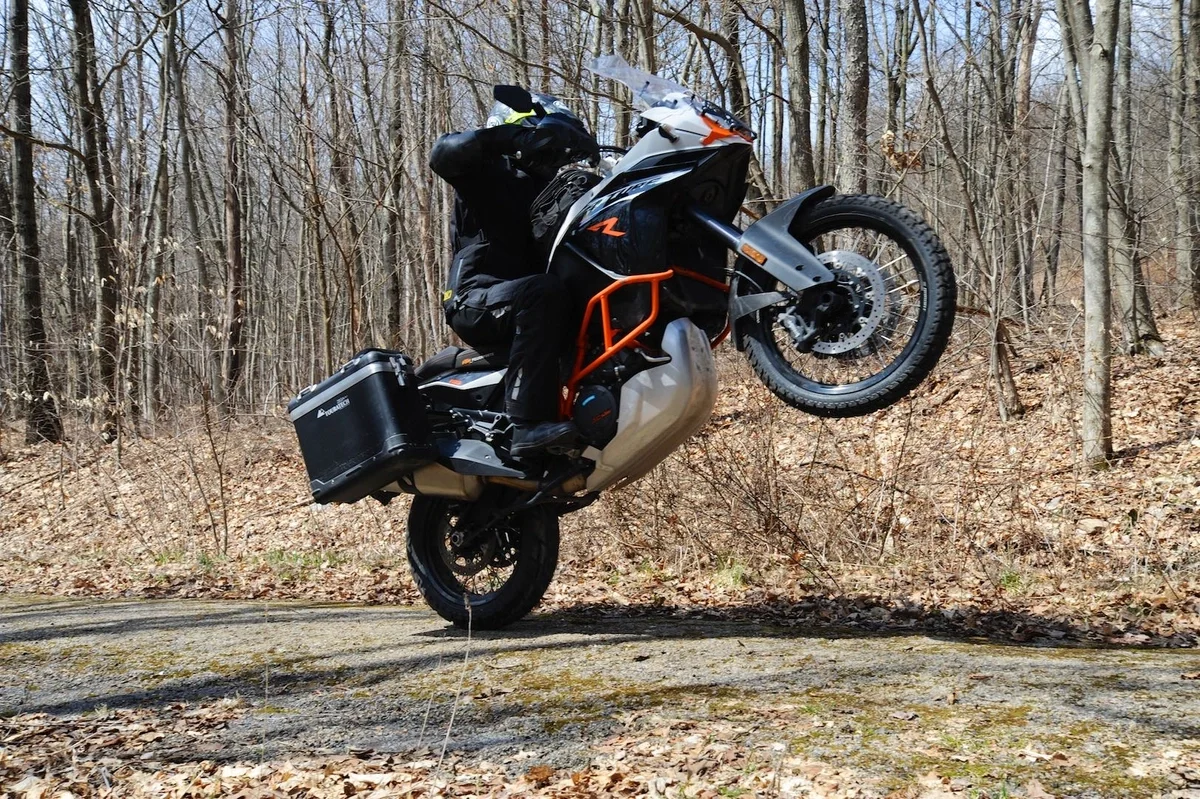
This is a big, powerful adventure bike with an automated manual transmission (AMT). AMT means the bike shifts gears for you or lets you shift with a paddle, no clutch lever needed. That's a significant change in how you interact with the motorcycle. Some riders love it. Others want the clutch back. A day on this bike tells you which camp you're in.
Royal Enfield Classic 650
Royal Enfield is pushing hard into the midweight space. The Classic 650 targets riders who want a simple, retro bike without the price tag of a Triumph or BMW. But "simple" can also mean "not enough" if you ride highways regularly. Rent one and see if the power and comfort hold up on your typical routes.
BMW R 1300 R
BMW's boxer-powered naked roadster is packed with electronics: dynamic traction control, riding modes, semi-active suspension. The spec sheet reads like a tech demo. The real question is whether all that technology disappears into the background and lets you enjoy the ride, or whether it creates menus and modes you'd rather not deal with. A rental answers that fast.
Harley-Davidson Road Glide
Harley refreshed the touring lineup with the Milwaukee-Eight 117 engine and updated infotainment. If you're considering a bagger for long-distance riding, you need to know how the fairing-mounted windscreen (fixed to the frame, not the handlebars) affects handling feel. It's different from a fork-mounted screen. Ride one for a full day before putting down $30,000-plus.
The Math: What a Rental Saves You vs. Buyer's Remorse
Let's keep this simple.
A two-day Twisted Road rental on most bikes costs between $150 and $400. That gives you enough time to ride the bike the way you'd ride your own: highway commute, weekend twisties, errands, whatever your real-world riding looks like.
Now compare that to the cost of buying the wrong one.
A new motorcycle loses 10% to 20% of its value the moment you ride it off the lot. On a $15,000 bike, that's $1,500 to $3,000 in immediate depreciation. If you realize six months later that the bike doesn't fit, you're looking at a $3,000 to $5,000 loss when you sell or trade it. Add listing fees, time spent dealing with buyers, and the hassle of the whole process.
A $200 rental is insurance against a $5,000 mistake. That's not marketing spin. That's math.
And if the rental confirms the bike is right for you? You just bought with confidence instead of hope. That's worth the investment on its own.
Stop Guessing. Start Riding.
The motorcycle industry makes it hard to test before you buy. Dealers restrict rides. Demo days are rare. Reviews and spec sheets only go so far.
Renting solves the problem. You get real miles on real roads with the exact bike you're considering. You find out what works and what doesn't before your money is on the line.
Search Twisted Road for the make and model you've been researching. Rent it for a day or a weekend. Ride it the way you ride. Then decide.
Your next bike should be a decision, not a gamble.
FAQs
Can you test ride a motorcycle before buying it?
Most dealerships limit or refuse test rides due to liability and insurance concerns. Renting the exact make and model you're considering gives you a full day (or more) of saddle time on real roads. That's the most accurate test ride you can get.
How much does it cost to rent a motorcycle to test it?
On Twisted Road, daily rates typically range from $75 to $200 depending on the bike. That's a fraction of the depreciation loss you'd take from buying the wrong motorcycle and reselling it.
What do I need to rent a motorcycle on Twisted Road?
You need a valid motorcycle endorsement on your driver's license, a credit card, and a clean riding record. Twisted Road verifies every rider's credentials before approving a rental.
Is it worth renting a motorcycle before buying one?
Yes. A two-day rental costs a few hundred dollars. Buying the wrong bike and reselling it costs $3,000 to $5,000 in depreciation alone. Renting first is the most cost-effective way to make a confident purchase.
What kind of insurance does Twisted Road provide?
Every Twisted Road rental includes up to $1 million in liability coverage. Riders can also purchase additional damage coverage for extra protection during the rental period.