

Essentially, there are two types of motorcycle luggage to choose from: soft and hard.
Some say soft luggage is best for urban riding. Others say it’s the only choice for long trips. Still, others claim that hard luggage only should be used for city living.
But where does that leave you? (besides being confused).
Considering the factors of each is important not only for your safety but also for your bike and wallet. If you’re a frequent rider, it might be wise to eventually have both soft and hard motorcycle luggage.
For now, let’s check out the differences between the two types of gear.

Soft Motorcycle Luggage
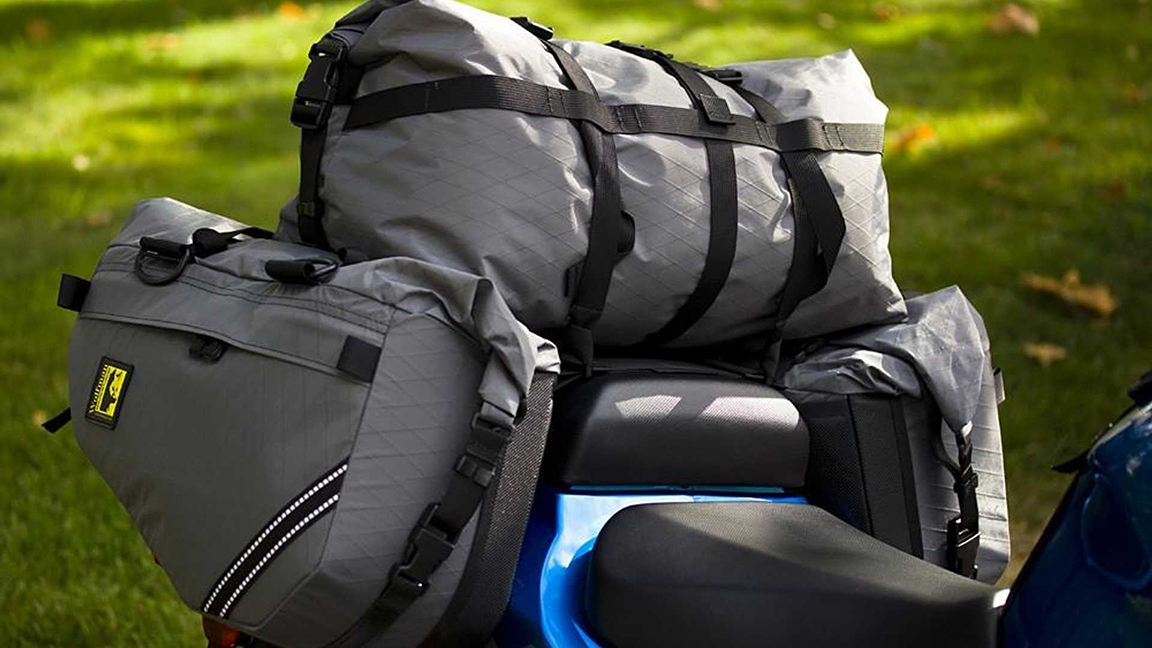
Soft luggage is typically made from vinyl, nylon, or canvas material. These attach to bikes via straps, so they can fit on pretty much anything you ride. To decide what works best for you, it’s important to think about what type of items you're carrying and where you're riding.
Versatility and safety are definitely the biggest perks of soft motorcycle luggage. Hard luggage poses a danger of causing injury in a crash, whereas soft luggage can actually lessen the damage from a fall. For some, that might be enough of a reason to only use soft gear.
Another big deciding factor is cost. Soft gear is typically much less expensive than hard gear and is generally less of a financial commitment.
While hard luggage stays the same size and weight no matter what you’re carrying, soft luggage is only as bulky as your stuff. This means if you pack light, your luggage will consume less space. And because soft gear uses straps or a rack-less attachment, it's much easier to remove from your bike. That also means that you can quickly attach it to a different bike, or switch it out for other gear.
Soft luggage's cloth-like material also offers plenty of room for customization. It often comes with a MOLLE system (webbing and/or straps for attaching additional gear) and versatile pockets. Expandable and usually featuring a roll-top, soft luggage is generally pretty painless to use.
Soft luggage is also much more lightweight and, thus, is favored for off-roading and adventure riding. It doesn’t widen your bike in the same way that hard, heavier luggage does, so you’re able to zip around mountains and through traffic just as if you weren’t carrying anything at all.

Though the soft luggage is more versatile, it’s also less stable than hard gear.
Because it is so easy to detach, some soft luggage can actually shift while you ride if you aren’t using the right type of rack (not the best when your bike starts heating up). Plus, the material can rub against your bike and end up scratching your varnish.
Also, the material can be easily ripped, making it susceptible to break-ins or damage from the environment, especially if you are off-roading. And even if soft luggage claims to be fully waterproof, it’s more water-resistant than anything. It's not ideal if you are carrying around electronic equipment.
Most don’t usually have a lock, although you can buy more protection like slash-proof coverings. Even with this added cost, soft luggage is still likely to cost you significantly less than hard luggage.
Soft gear is also not necessarily the most stylish. While this might deter thieves, it can also cramp your style! Soft gear can appear to be a bit bulky and messy and is also more difficult to unpack. Sometimes your stuff can end up in a tangled mess. Pulling over to grab an item or two out of your luggage can turn out to be more hassle than it is worth. Plus, soft gear can misleadingly appear to hold more volume, but actually often holds less than its counterpart.
Overall, soft motorcycle luggage is safer and cheaper, but can also be bulky and can be easily broken into. As always, it’s best to research gear and determine what is best for your journey.
Some popular manufacturers to check out include Mosko Moto, Wolfman Luggage, and Giant Loop.
Pros of Soft Motorcycle Luggage
- safer in a crash
- easily detachable
- inexpensive
Cons of Soft Motorcycle Luggage
- can look messy
- easy to break into
- may shift while you ride
Hard Motorcycle Luggage
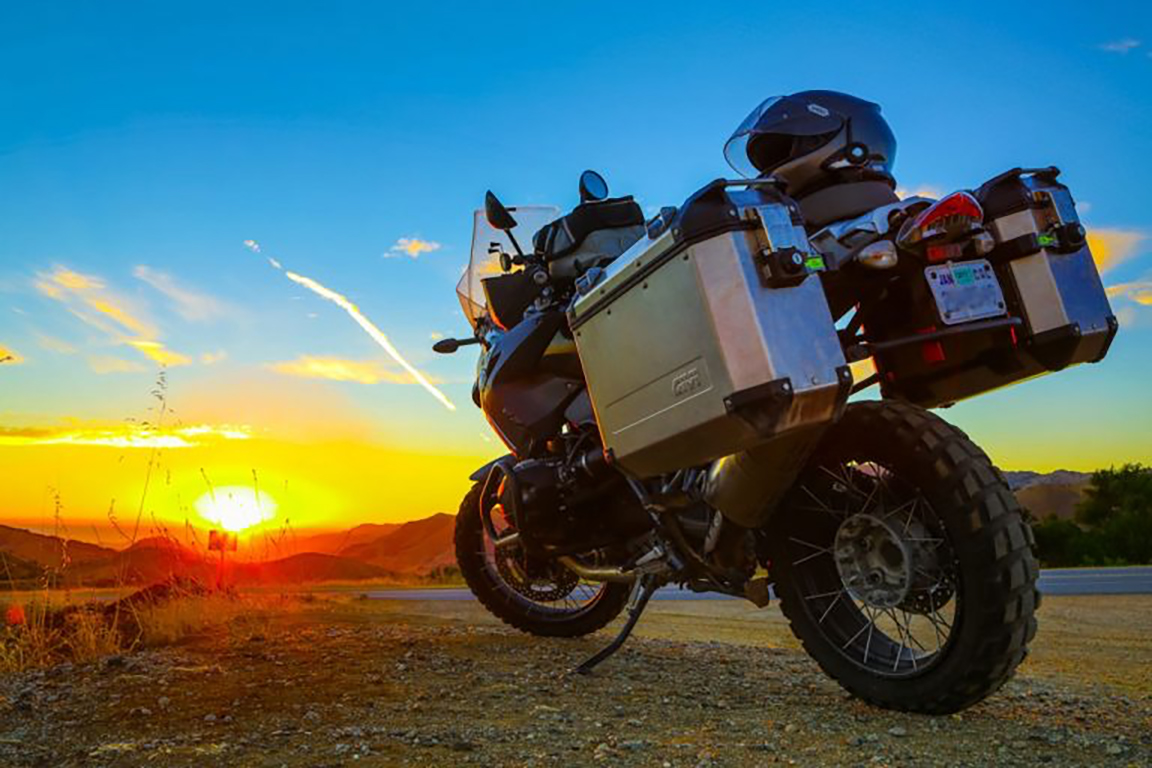
Hard luggage is typically made of aluminum or hard plastic and is often waterproof and secure. In fact, the only thing harder than this luggage is the decision about what type of gear to use!
Hard gear is pretty durable to the elements and can safely hold delicate electronics. Since it is a hard material, though, there is also vibrational damage to be aware of while you ride. Especially if you’re on a dirt road, you should be sure to protect your electronics and the like with a a soft cloth or a bag to avoid this. But if you do make an unfortunate tumble, you can be confident that the hard luggage will keep your items safe.
It can also generally accommodate a larger volume of items and makes it simple to organize your items. Since you can open the luggage and grab something, it is much less of a headache when you pull over and just need an item or two from your bags.
Hard luggage usually requires hard panniers (a framework that fits on your bike to hold the cases). These are much more stable than the straps soft luggage uses, and also mean that your luggage won’t move around while you ride.
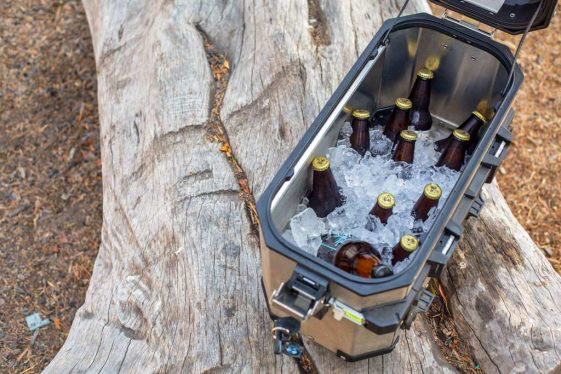
The best thing about hard luggage is that it is so multifunctional. Hard luggage can do a lot more than hold your stuff. You can fill these bad boys up with ice, pop in some beverages and snacks for that all-day fishing trip, or flip it and use it as a stool to hang out around the campfire. And if you’re hanging out in bear country, you can even convert these into food safes.
While shiny, good-looking luggage can attract thieves, this type does offer a lower chance of break-ins. Ultimately, a determined thief will take what they want, but hard luggage will slow them down as it's not as easy to gain access to.
Lastly, although this depends on your style, hard luggage tends to just look better. Some would even say the biggest perk of hard luggage is that you can add stickers.
However, hard luggage also has some serious negative factors to consider. The most significant consideration is safety. We mentioned earlier that hard luggage has the potential to break bones and cause injury in a fall. Thus, hard luggage is not a great fit for adventure riding and off-roading.
The next biggest consideration for hard luggage is the cost. It can be an investment. With installation included, this type of luggage can sometimes end up costing just as much as the bike itself.
Since the racks are semi-permanent attachments, it can be a bit of a headache to constantly take them off or change them out. Some hard luggage does offer a quick-detach feature, so you can just pop your bags right off your bike. Otherwise, you can line your heavy luggage with soft bags and just lift them out when you arrive at your destination.
This type of gear is also often very heavy and will increase your bike’s weight and width. The added strain on your frame reduces your turn speed and can make lane splitting even more difficult. Hard luggage is undoubtedly better suited for large bikes.
But is hard gear more durable than soft gear? Well, it’s complicated.
Hard gear can become weakened by various nicks and damage to its surface, but they can usually be easily (and cheaply) repaired. The biggest worry is that if the latches or seals break, the entire luggage becomes unusable as it can no longer safely attach to your bike or keep out the elements. After the expense of hard luggage, breaking them beyond repair is a big annoyance. Often, the chance of breakage and being left with no way to carry your things is why riders choose soft luggage for long trips. It might be best to keep your hard luggage for relatively short journeys or when you’re just zipping around your hometown or city. Ultimately, it really depends on your riding style and needs.
For some, the safety factor of hard motorcycle luggage might be enough to deter them from using it. Overall, though, hard gear definitely keeps your valuables safer (from other people and the elements) than soft luggage does, and the benefits of more protection are undeniable.
If you’re looking to check out some different hard luggage, some popular manufacturers are Touratech, Jesse, and Givi.
Pros of Hard Motorcycle Luggage
- difficult to break into
- weather-resistant
- easy to keep items organized
Cons of Hard Motorcycle Luggage
- less safe upon impact
- more expensive
- creates a heavier and wider bike
The Verdict: Soft vs. Hard Motorcycle Luggage?
Obviously, the choice is up to you. Maybe even a mix of both is what works for you! As the motorcycle industry continues to expand, maybe we’ll see some new innovations in our luggage.
Ultimately, it’s best to make a well-informed decision based on what you are traveling with and where you are traveling. Be sure to research your options and choose the one that is best for your needs.