
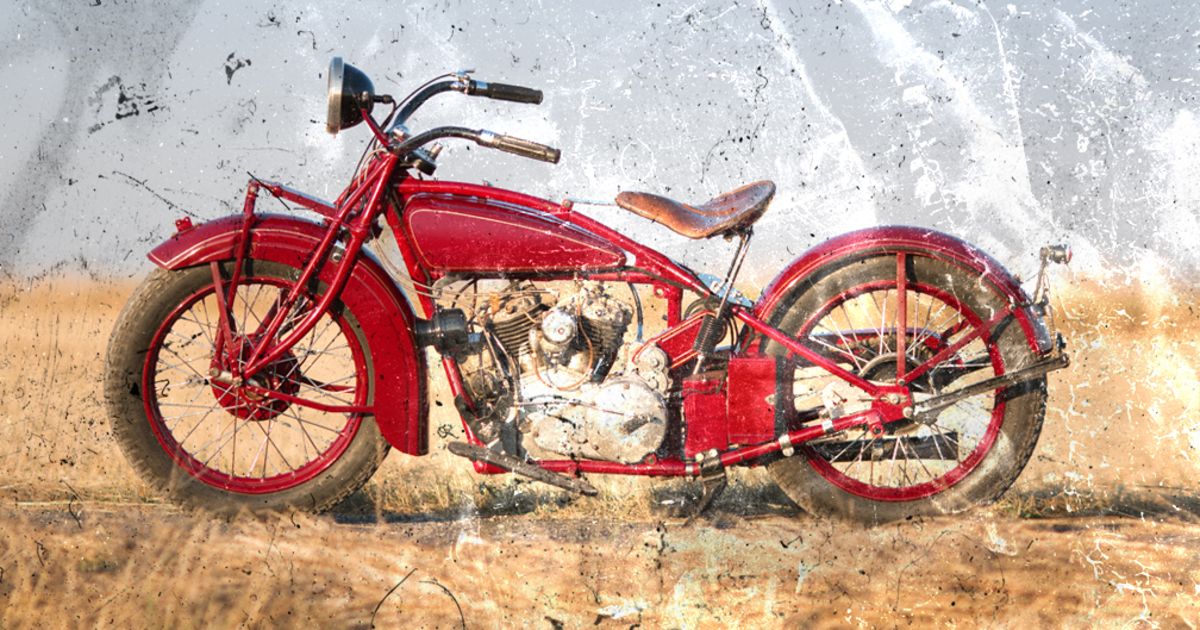
We know what a motorcycle can mean to someone–the open road, the freedom of exploration, the thrill of adventure just around the next corner. The feeling of the wind and sun on your skin as you race around mountains and through deserts is one that can’t easily be described.
Yet motorcycles, and those who ride them, haven’t always been welcomed with the most open of arms. Even today, motorcyclists and other bikers are subjected to road discrimination and a bad attitude from insurance companies. But while finding parking isn’t the worst problem in the world, the backstory as to why motorcyclists in America have been considered “hooligans” and “thugs” is a lot more complicated than you might think. Read on to learn about the interesting history of motorcycles and their riders in America.
Despite the “bad biker” rep, two world wars, and a depression, the spirit of motorcycle culture is still thriving. As more and more people discover their love of off-roading, competitions, or even just a midnight ride, the culture around motorcycles continues to inspire people.
The beauty of riding is that it still provides the feeling of freedom for generation after generation. With moms and dads introducing sons and daughters at a young age, who then grow up to be a part of the strongest community on the planet.
How Motorcycles Created a Community
Developed by Gottlieb Daimler and Wilhelm Maybach in late 1880s Germany, the first “motorcycle” was maybe more of a piglet than a hog.
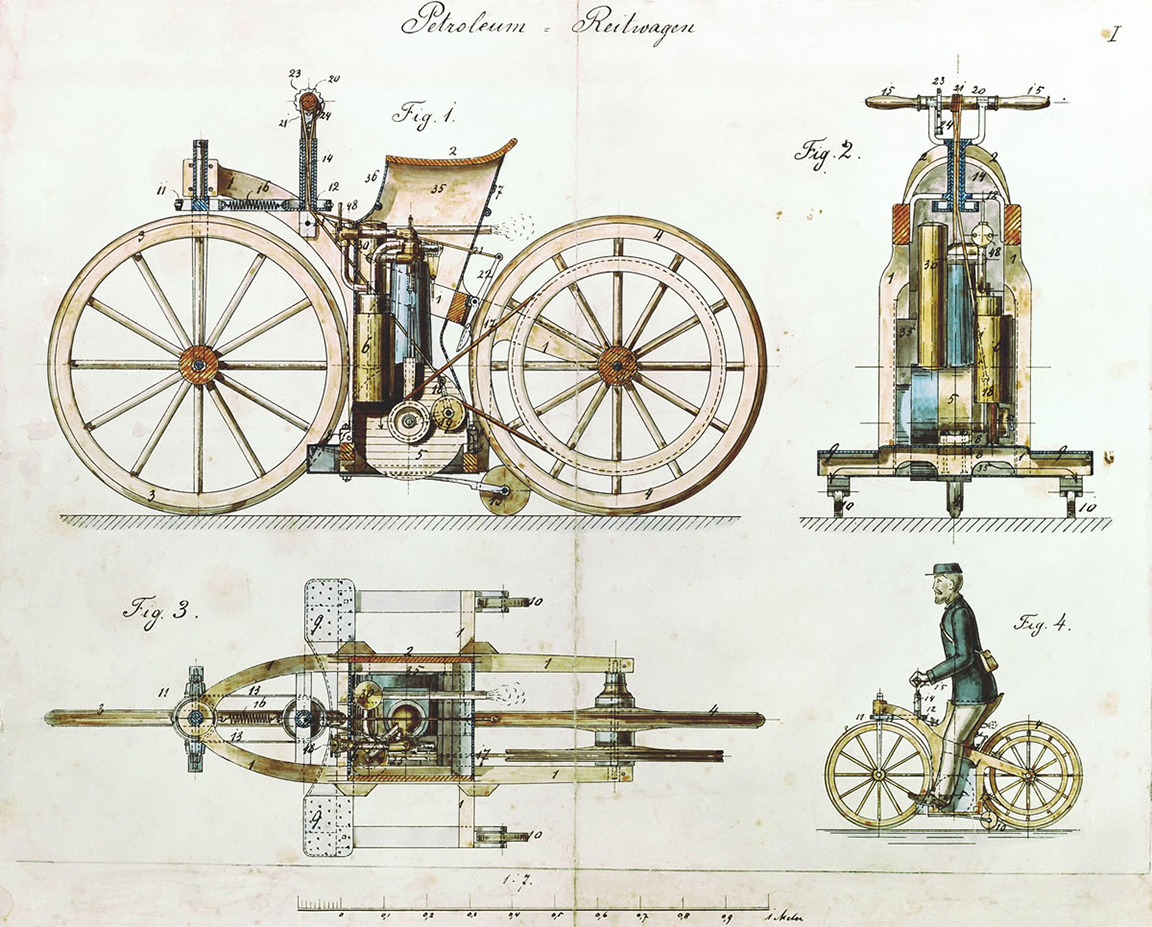
Described as looking like an “instrument of torture”, the motorcycle took some time to develop into what it is today. Even still, the concept of a motorized bike took off quickly. People soon learned that they loved the friendly price point, speedy travel, and stylish aesthetic.
Soon, a flurry of American companies were inspired. Just a few years into the new century, the titans of motorcycle production were born. First Metz, then Indian Motorcycle (originally named Hendee Manufacturing Company), and, of course, Harley-Davidson. As more people began riding motorcycles, bikers began forming clubs and hosting competitions. Groups of under-represented motorcycle lovers like women and African Americans were also gathering together to ride.
Even during these early years, motorcycle riders advocated for their share of the road. In 1903, clubs were popping up around the country to discuss the rights of the road. George Hendee, founder of the Indian Motorcycle company, was a chairman of many such meetings. He advocated for the formation of a real community around motorcycles and, eventually, they were able to form the first official organization: Federation of American Motorcyclists (FAM).
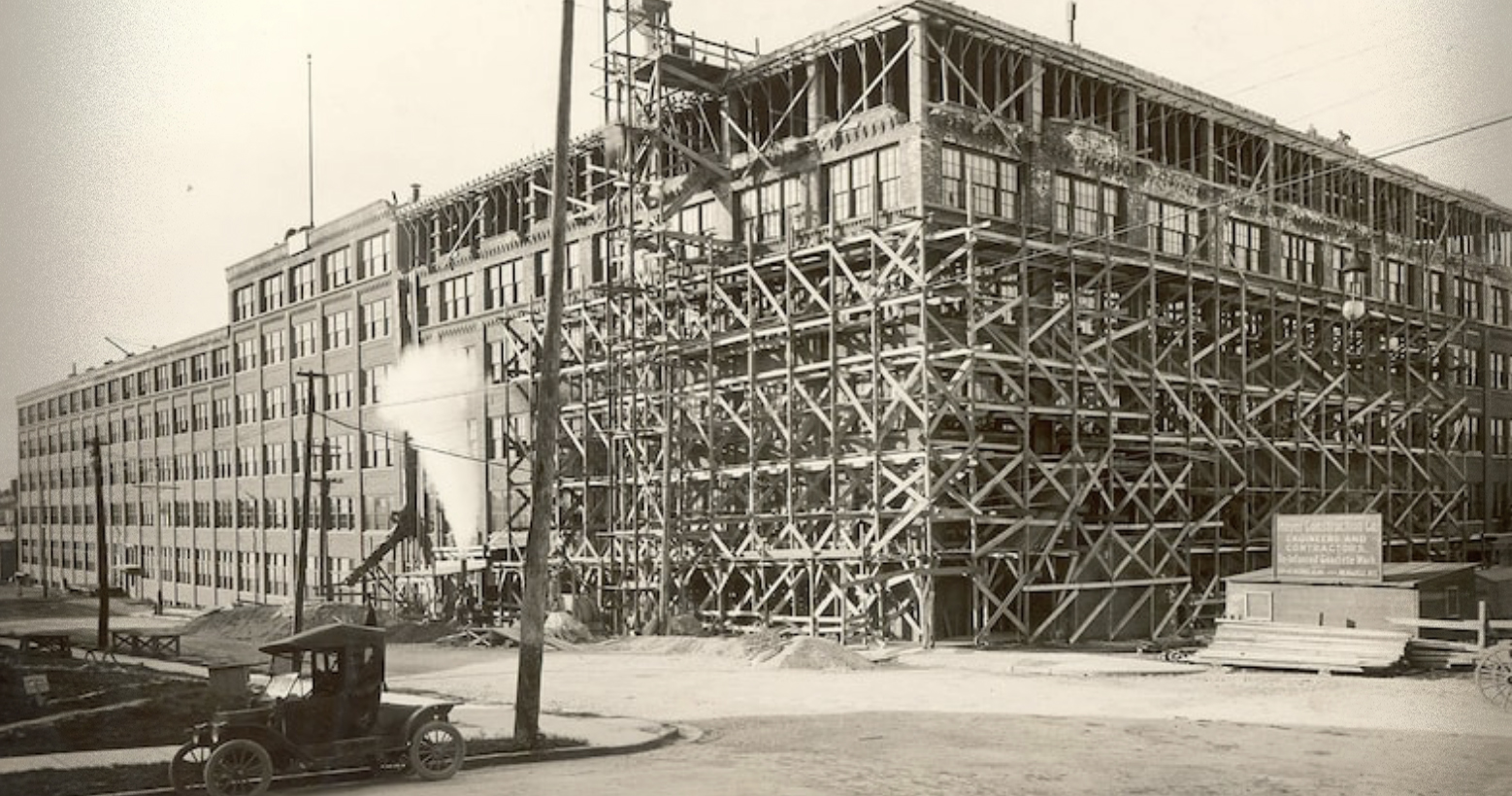
However, it wasn’t until WWI broke out that the motorcycle companies really began to rev up production. By the time the war was in full swing, both Indian and Harley-Davidson were contributing at least half their production to the war effort. And by the end of the 1920s, Harley-Davidson had grown almost 300% and was the largest motorcycle manufacturer in the world. Notably, Harley-Davidson also started a service school to train army mechanics.
Even though most motorcycle activities were canceled during the war, a majority of production was dedicated to combat, and a significant portion of the population was gone or injured from action, the love of motorcycles kept the culture alive. The FAM eventually collapsed, but luckily, other organizations were able to survive. After WWI ended, the Motorcycle & Allied Trades Association (M&ATA) began recognizing competitions, clubs, and other activities. As interest grew, the American Motorcycle Association was formed in 1924 and headquartered in Chicago. The AMA still exists today, and is the definitive leader of the industry.
Motorcycles Win the War–And a Following
Motorcycle culture has been so enduring because, even during the chaos of wartime, they stirred the imagination. As Britain churned out bike after bike for the war effort, each one had a more dazzling name than the last. Names like “the Norton Commando, the Vincent Black Shadow, the Velocette Venom, the Ariel Red Hunter, the Royal Enfield Bullet” weren’t just created for the sake of making a sale. Instead, these flashy titles offered a chance of fantastic survival in the face of evil.
Poet, essayist, and motorcycle enthusiast Melissa Holbrook writes: “The motorcycle offered…a sort of stab at immortality: these man-made creations were constructed so that on them we could forget the sadness of not having been born this mighty…Although we made them, they make us fly.”
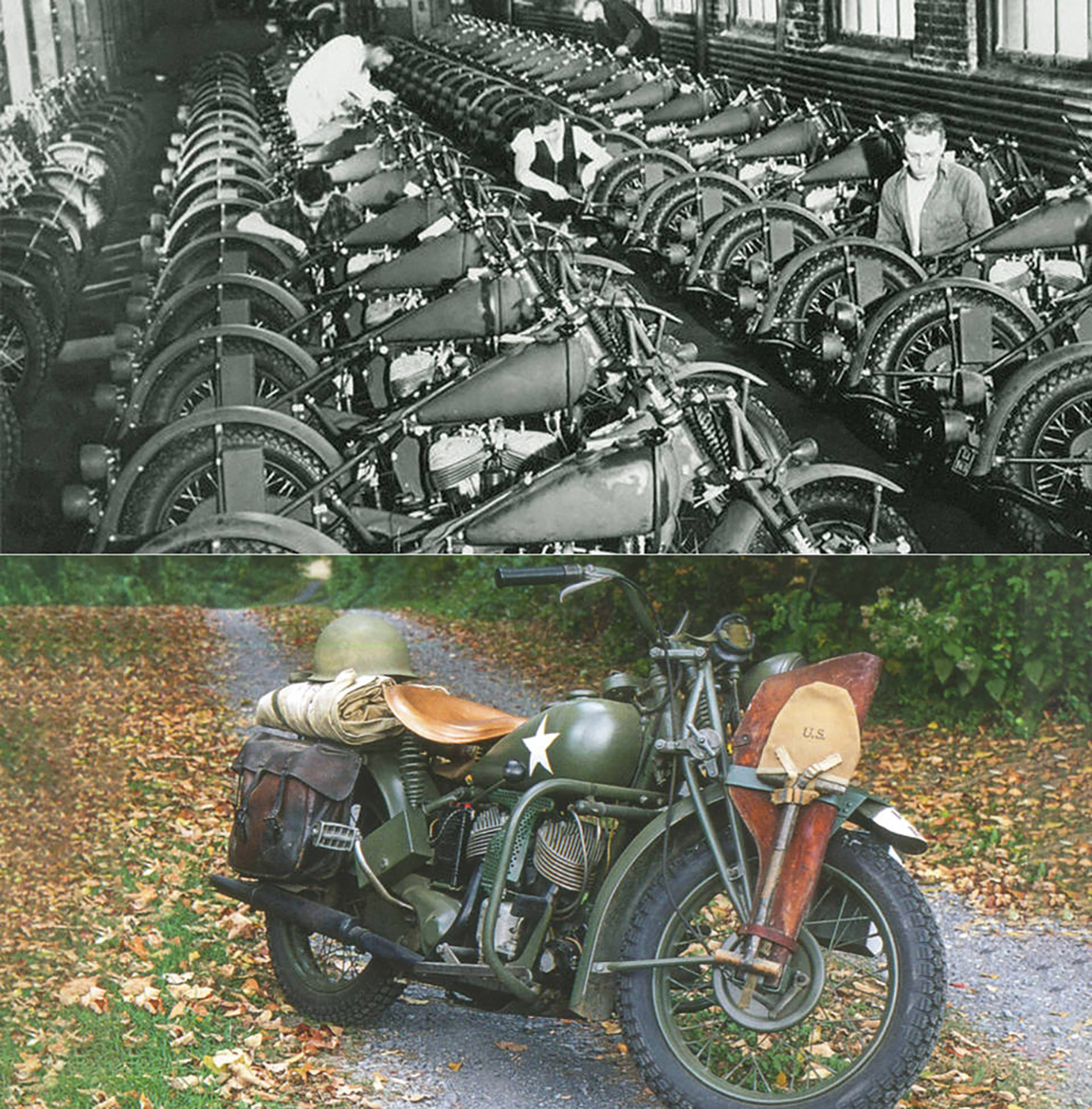
However, these brave names did little to actually protect soldiers during combat, and the idea of a happy-go-lucky motorcyclist didn’t last long. Many vets were haunted by their time of service. A haven for battered and haunted soldiers, motorcycle clubs offered the same sort of togetherness vets may have shared with their comrades overseas. The horrors of war had disillusioned many of them, leading them to wonder if a different world was possible.
If Jax Teller from Kurt Sutter’s Sons of Anarchy is a reliable source, anarchism is an important motivator for motorcycle culture. In her essay “Anarchism”, philosopher Emma Goldman cites anarchism as the “great liberator of man from the phantoms that hold him captive”. For those trapped in the perils of PTSD, a self-sufficient and powerful community like a motorcycle club is a very appealing space.
Whatever the reason, the biking community continued to become more popular. It wasn’t until the summer of 1947 that the community changed forever.
Motorcycle Culture: The Twists And Turns
While not quite yet reaching outlaw status, bikers were beginning to develop into a more mischievous presence. In 1946, just a couple months after the second world war had ended, the infamous Boozefighters penned their club requirements:
- Get drunk at a race meet or cycle dance.
- Throw a lemon pie in each other’s faces.
- Bring out a douche bag where it will embarrass all the women (then drink wine out of it).
- Get down and lay on the dance floor.
- Wash your socks in a coffee urn.
- Eat live goldfish.
- Then, when blind drunk, trust me (Kokomo) to shoot beer bottles off of your heads with my .22.
Certainly not anyone’s Sunday best, but they weren't advocating for complete destruction. It wasn’t until the next summer that motorcycle culture was altered forever–and it wasn’t necessarily for the best.
Prior to WWII, the AMA had started their still-popular Gypsy Tours. These were the biggest motorcycle events of the year, and continue to offer an incredible three-day motorcycling experience. By 1925, the tours had been so successful that the AMA was hosting over two hundred of them. But when the war broke out, the tours had been canceled like most motorcycle activities.
But in July 1947, the Gypsy Tours were back on. Almost 4,000 people drove their bikes to the small California town of Hollister. Perhaps more important than the actual event was the reporting of the event. While an event of that size (especially right after the war ended) was expected to be a bit wild, the story told in Life magazine depicted something much more intense.
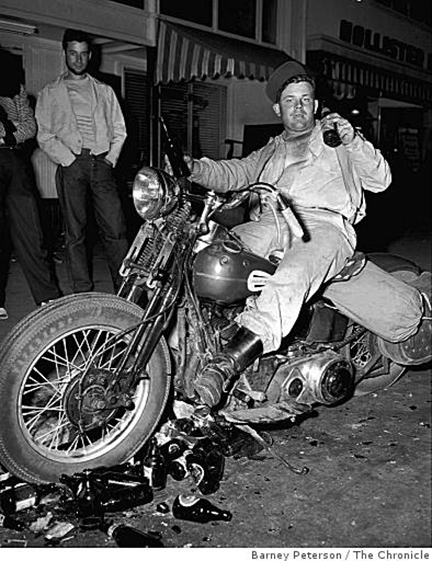
This photograph in particular sparked outrage from motorcyclists, lawmakers, journalists alike. Published in Life magazine, the article accompanying it was even more incendiary. Although brief, the article claimed that motorcyclists had essentially ransacked the entire town by breaking into bars, drinking publicly, and riding their motorcycles absolutely everywhere. The coverage even claimed that police arrived in riot gear, and martial law had became necessary.
With a circulation of almost five million people, the article was highly influential.
Almost immediately, the AMA attempted to reassure the American public that motorcyclists were not the wild drunks who were featured in Life magazine. Famously, the organization stressed that “99% of motorcyclists were law-abiding citizens.” They also revised their policy regarding clubs. Motorcycle groups now had to follow rules and register in order to be recognized, and every other group was automatically considered “outlaw”. While the intention of the statement may have been to take control of the situation, it really just created a space where those non-law-abiding riders could thrive. The backlash of this statement resulted in a rise of “1%” motorcycle clubs, which were the self-billed 1% of non-law abiding citizens.
However, a recent investigation by the International Journal of Motorcycle Studies revealed the long-buried truth.
During the time, journalism was not necessarily the fact-checking machine that it aspires to be today. Sensationalism and story-telling held a bit more weight than the actual truth did. After the constant stream of news from WWII, newspapers were a ghost town in the summer of ‘47. Magazines which had previously flown off the shelves were now sitting in stores, just waiting to be turned into pulp. In short, journalism was in a crisis.
The two newspapers who “covered” the tour were engaged in fierce competition over readership. While the tour did have a higher-than-usual attendance, the “chaos” described in the article was found to be mostly inaccurate. And although the photo above might seem obviously staged, it did nothing to protect the reputation of motorcyclists. Instead, the article created a damaging reputation that has still prevailed– even almost a century later.
By the time the 60s rolled around, the image of an outlaw biker was popularized in the media. Movies and shows like The Wild Ones (which depicted the Hollister riots), Any Given Sunday, and Easy Rider worked to cement the reputation of “bad” bikers. In combination with Hunter S. Thompson’s grisly account of the Hells Angels and the tragic events of the Altamont Free Concert, motorcycling had been permanently linked to crime and rebellion.
In an effort to scrub the image, the AMA started their “Put Your Best Wheel Forward” campaign. Director Lin Kuchler describes the campaign as an attempt to “encourage all motorcyclists to present a good appearance to the public.” While the reputation still lingers, bikers are a bit more welcomed than they used to be.
Motorcycle Riders Define Their Future
Although outlaw clubs still exist, and are certainly linked to some criminal activities, the majority of law-abiding motorcyclists might now indeed be close to that 99%.
Motorcycle culture has affected almost every area of pop culture in America. But perhaps the strongest influence of motorcycle culture appears, believe it or not, on the runway. As we know, a leather jacket, big black glasses, and a bandana can make anyone look cool.
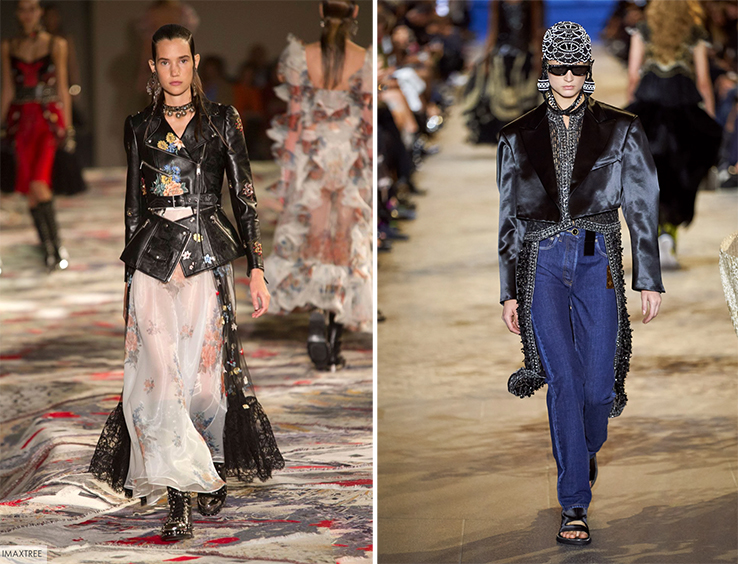
Louis Vuitton, Ready to Wear 2022 (right)
The freedom of a good ride has also continued to inspire many works of art. Mellisa Holbrook, poet and biker, writes beautifully of the experience:
"You learn the basics of how to ride, make mistakes, learn some more, futz around. Buy a bike and learn to fix it, because fixing it and the accompanying, often temporary, flush of self-sufficiency are part of the allure of motorcycling in this otherwise unfixable world. Go on lots of rides. Grow to love traveling, feeling as though only by moving can you be at rest. Build a world made of maps and dream of using all of them…Death's minions ride motorcycles. At her bidding, a silent but imperious directive delivered by thought alone, they come for their victim, out from the fog, out from the frame's edge, out from the horizon."
The promise of freedom and self-sufficiency in “this otherwise unfixable world” seems to still hold appeal for people, as during 2020 (arguably the most stressful year in memory), Americans bought almost 70% more motorcycles than the year prior. Additionally, more women than ever are getting on the road! And as more companies look into prioritizing electric motorcycles, the roads might look very different in the next few years.
Perhaps this tells us something that we’ve always known, but forgotten recently. Even in economic depression, global war, a pandemic–the open road promises an escape from your worries.
Interested, but not ready to commit?
Can't decide on which motorcycle to rent or still saving up money for your dream moto? Renting a motorcycle from Twisted Road, is an affordable way to try out all the motorcycles your heart desires. We offer the chance to experience the joys of the road–but all on your terms.
"I started with my motorcycle license 3 years ago and have used Twisted Road for all my motorcycle adventures. As a good friend once told me before buying a bike try every style of motorcycle so you can know what fits you best. Been very happy with the peer-to-peer experience and would recommend them every time. I still continue to rent as it is cheaper than buying." — Jose S., Los Angeles, CA