

Harley-Davidson showed up to the 2026 Mama Tried Motorcycle Show in Milwaukee with something nobody expected: a carbon fiber cafe racer called the RMCR.
Revolution Max Cafe Racer. That's what the name stands for. And the concept is every bit as sharp as the acronym.
Quick note before we get into it: the RMCR is a one-off concept. You can't rent it, buy it, or swing a leg over it. But Twisted Road has hundreds of Harleys available across every U.S. state, from Sportsters to Road Glides to Pan Americas powered by the same 1250cc Revolution Max engine inside the RMCR. Search Harley rentals near you on Twisted Road.
Now, here's what the RMCR actually is, what it signals about the brand's direction, and why it matters to anyone riding or thinking about riding a Harley in 2026.

What Is the Harley RMCR Concept?
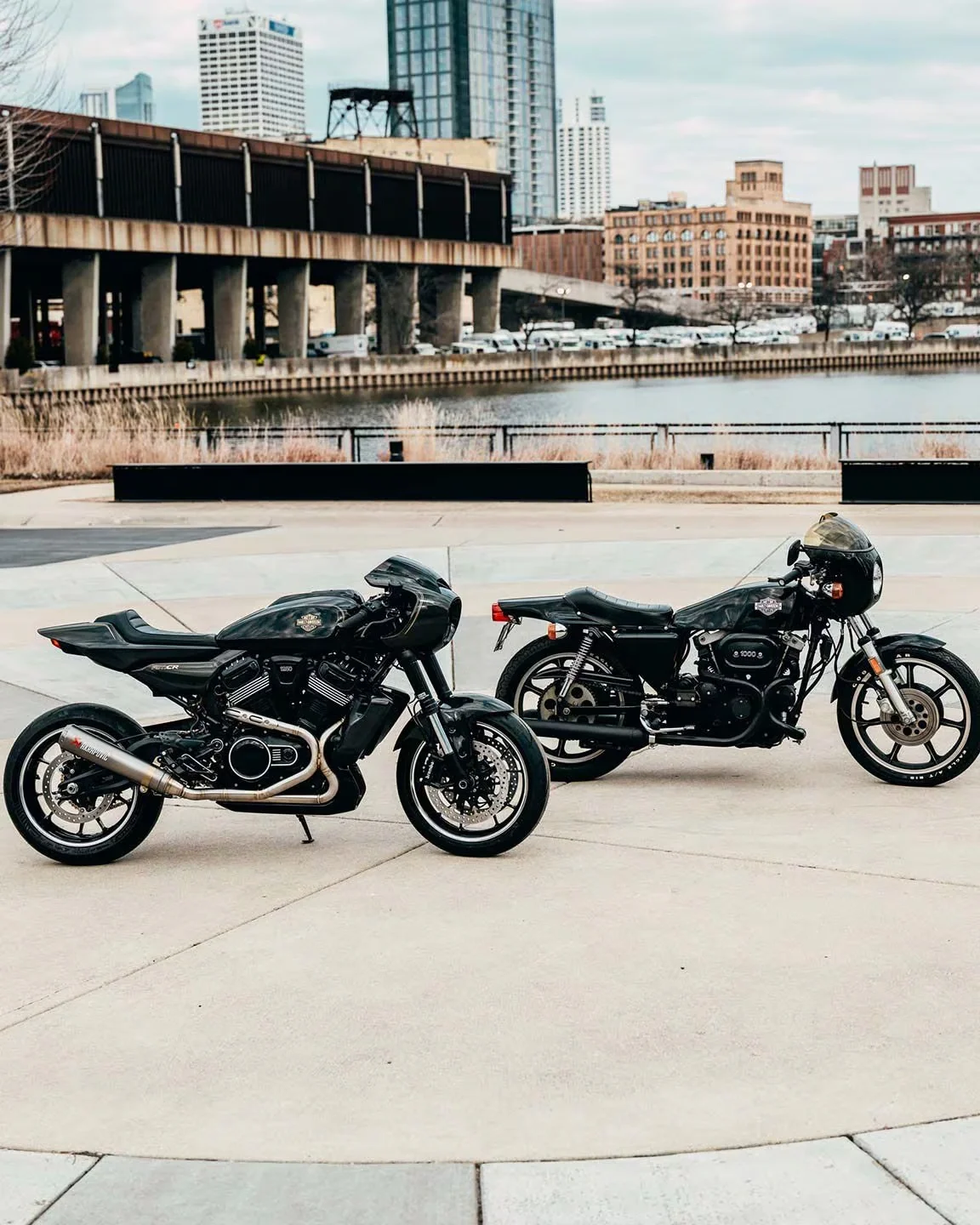
The RMCR is a concept bike built by Harley's in-house design team to see how far they could push the Revolution Max platform. According to Cycle World's coverage of the unveiling, the bike reinterprets the 1977 XLCR cafe racer for the modern era.
Here's the spec breakdown based on what Harley has shown publicly so far.
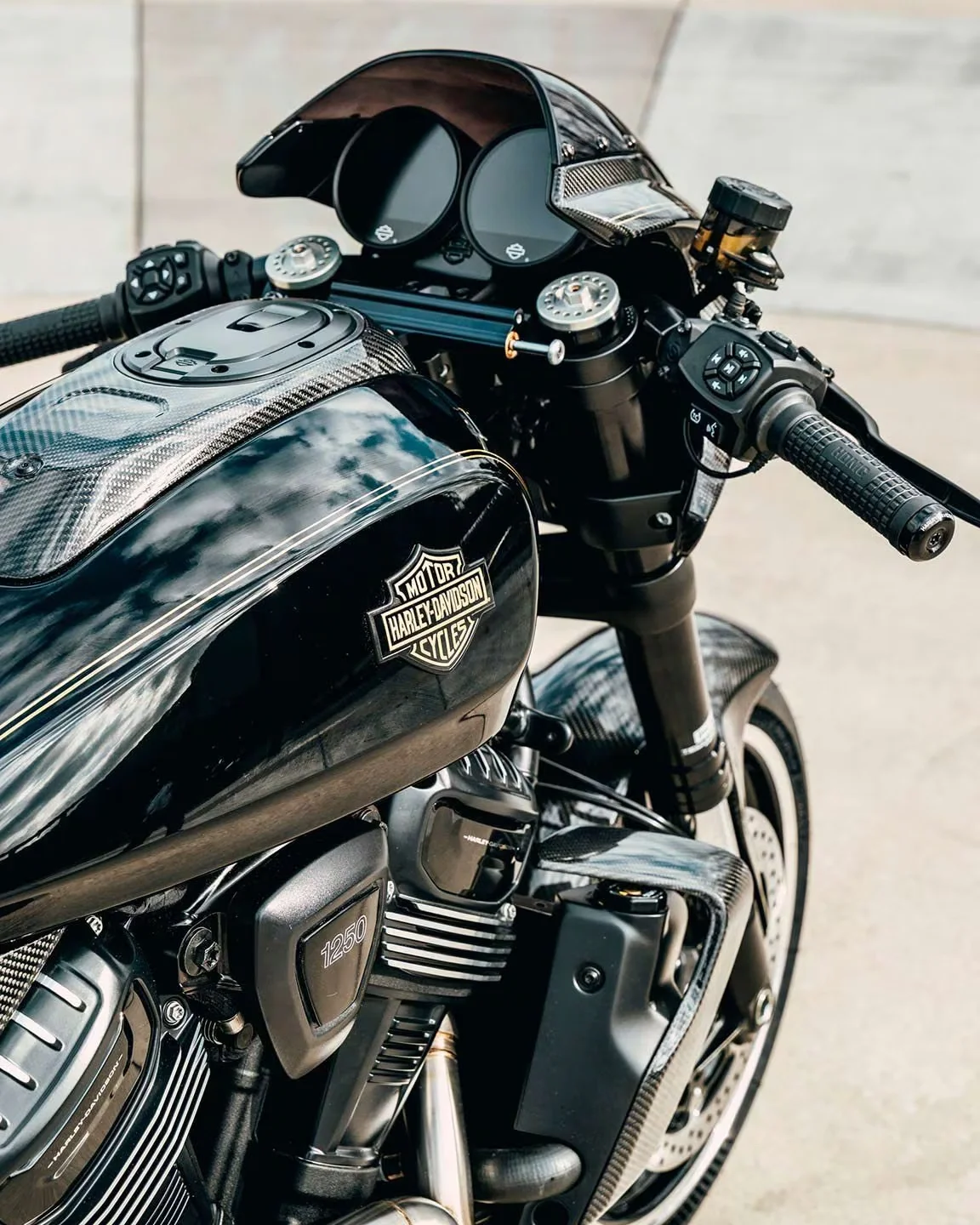
Engine
1250cc Revolution Max V-twin. Liquid-cooled, 60-degree, dual overhead cams. The same motor that powers the Pan America and Sportster S, tuned to produce around 150 horsepower and 94 lb-ft of torque. For context, the original XLCR made 57 horsepower. The RMCR nearly triples that output.
Chassis
Tubular steel frame with the engine used as a stressed member. That's the same structural approach Harley uses on the Pan America. A stressed-member design means the engine itself acts as a load-bearing part of the frame, which cuts weight and keeps the bike compact.
Bodywork
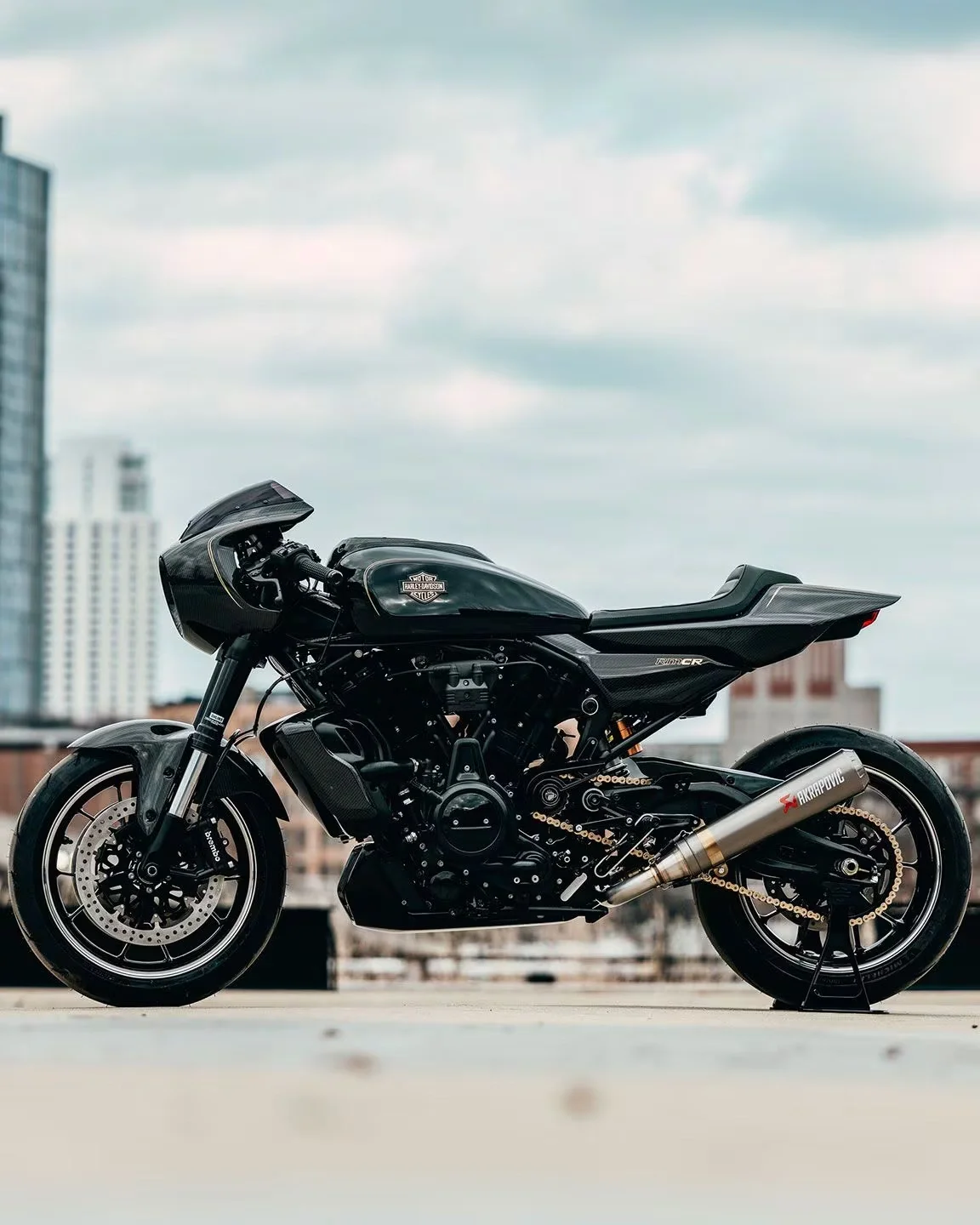
Carbon fiber throughout. Bikini fairing, tank cover, radiator surround, front fender, tail cowl. The carbon weave is left visible. No paint, no chrome, no excess.
Suspension and Brakes
Ohlins Black Series inverted forks up front and a fully adjustable Ohlins rear shock. Brembo monoblock brake calipers. A steering damper between the clip-on handlebars. This is racetrack-grade hardware, not cruiser parts.
Exhaust
Custom two-into-two Akrapovic system. Two pipes exit on each side, which is a direct nod to the XLCR's siamesed setup from the late 1970s.
Tires
17-inch wheels wrapped in Michelin Power GP2 tires. These are genuine supersport tires, not touring rubber. That choice alone tells you this bike was designed to lean hard into corners, not cruise highways.
Status
One-off. No production confirmed. No pricing. Harley is collecting public feedback on social media before making any decisions about a production version.
Why the RMCR Matters
The RMCR matters because it signals that Harley sees a future beyond cruisers and baggers. Powersports Business reported that Harley is opening its social channels to gauge community response, with public reception playing a direct role in whether the bike moves to manufacturing.
The Revolution Max platform has already proven itself in Harley's Pan America adventure bike and the Sportster S muscle cruiser. Both bikes pulled in younger buyers who weren't drawn to the traditional air-cooled V-twin lineup. The RMCR could extend that reach even further.
Here's why that matters to riders:
1. It shows Harley is willing to experiment. The Bronx naked bike was shelved in 2020. The Street 500 and Street 750 were discontinued. If Harley builds the RMCR, it breaks a pattern of abandoning performance concepts.
2. It gives the Revolution Max engine a true sporting home. The motor has been waiting for a chassis built around performance riding rather than adventure miles or muscle-cruiser swagger.
3. It opens the door for middleweight options. If the RMCR succeeds, a smaller 975cc Revolution Max version becomes possible. That would put a performance-oriented Harley in the hands of newer and budget-conscious riders.
The XLCR Connection: A 1977 Flop That Became a Legend
You can't understand the RMCR without understanding the XLCR.
In 1977, Willie G. Davidson pushed an aggressive cafe racer through Harley's design department. The XLCR had a bikini fairing, blacked-out bodywork, siamesed dual exhausts, and rear-set pegs. It was Harley's first factory custom before factory customs were a category.
It bombed.
Harley sold roughly 3,000 units across two years before pulling it from showrooms. Buyers wanted chrome. Buyers wanted chopper silhouettes. The XLCR was too narrow, too sporty, and too far ahead of its time.
Then history did what history tends to do. Motorcycles.news covered the XLCR's journey from failure to collector icon, noting it's now one of the most collectible Sportsters Harley ever built. Prices climb every year.
The RMCR doesn't copy the XLCR. It channels the attitude. Blacked-out, narrow, unapologetically different from the rest of the lineup. Harley's design chief Bjorn Shuster called it a modern interpretation of a rebellious original. That framing is exactly right.
Will the RMCR Go Into Production?
Nobody knows yet. Harley is watching comments on Instagram, Facebook, and YouTube.
Arguments for production:
Positive reception has been loud. The Revolution Max platform is already in multiple production bikes, which shortens development time. The Sportster S audience shows there's a market for non-traditional Harleys. Competing European and Japanese retros are selling well, and Harley doesn't have a direct answer right now.
Arguments against production:
Harley has killed promising concepts before. The Bronx is the clearest example. Cafe racers remain a smaller segment than cruisers or adventure bikes. The RMCR would likely carry a premium price that limits its audience.
My bet? Harley builds a production version but in a toned-down spec. Cheaper bodywork instead of carbon fiber. Maybe a 975cc variant to hit a lower price point. Either way, something from this concept is likely to show up on a showroom floor within 18 to 24 months.
Can You Rent a Harley on Twisted Road While You Wait?
Yes. And this is where the RMCR conversation gets practical.
Twisted Road is a peer-to-peer rental platform with Harleys listed in all 50 states. You can rent a Sportster S to experience the same Revolution Max engine that powers the RMCR concept. You can rent a Pan America for an adventure-focused take on the same platform. You can rent a Road Glide, a Fat Boy, a Low Rider, or any number of classic Harleys for a weekend ride. Here's how Twisted Road works.
Renting makes sense for three reasons:
1. You get real saddle time before you buy. A dealer test ride lasts 15 minutes on a set route. A Twisted Road rental gives you hours or days on real roads. You learn whether the bike actually fits your body, your riding style, and your plans.
2. You try something outside your garage. If you ride a cruiser and want to feel what a sport-focused Harley does, renting is the cheapest way to find out without committing to a purchase.
3. You travel lighter. Fly to your destination, pick up a Harley from a local owner, and ride. No trailer. No cross-country haul. No wear on your own bike.
Owners benefit too. If you have a Harley sitting in the garage more than it sits on the road, you can list it and earn income while other riders enjoy it. Learn about listing your motorcycle on Twisted Road.
The RMCR is the most interesting thing Harley has shown in years. Whether it reaches production or stays a one-off concept, it tells riders where the brand's head is at. Performance. Carbon fiber. Modern engineering wrapped around a story that goes back to 1977.
If Harley builds it, I'll be first in line to test one. Until then, the Revolution Max engine is already out there in bikes you can rent today. Go ride one. Form your own opinion. That's the best way to decide if this chapter of Harley's history is worth following.
Your next Harley ride is a few clicks away.
FAQs
Is the Harley RMCR for sale?
No. The RMCR is a one-off concept bike built for the 2026 Mama Tried Motorcycle Show. Harley has not confirmed a production version or pricing. The company is collecting public feedback on social media before deciding next steps.
What engine does the Harley RMCR use?
The RMCR uses Harley's 1250cc Revolution Max V-twin. It's the same liquid-cooled, 60-degree engine that powers the Pan America and Sportster S, tuned to produce around 150 horsepower and 94 lb-ft of torque.
How much horsepower does the Harley RMCR make?
Approximately 150 horsepower and 94 lb-ft of torque. That's nearly triple the original 1977 XLCR's 57 horsepower.
Can I rent a Harley with the Revolution Max engine?
Yes. Harley models like the Sportster S and Pan America use the Revolution Max engine and are available on Twisted Road in many states. Search by make and model to find one near you.
When was the RMCR revealed?
Harley-Davidson unveiled the RMCR concept at the 2026 Mama Tried Motorcycle Show in Milwaukee in late February 2026.