
Since the turn of the century, BMW, KTM, and Triumph have dominated the adventure touring scene. Think of the ADV icons they began producing then, such as the R 1150 GS, 950 Adventure, and Tiger 900, respectively.
These machines continued to morph into their modern versions. They were joined by many others within the most competitive sector, such as the Ducati Enduro 1260 and the Yamaha Super Tenere, to name a few of the larger ones.
But what happens when an iconic American brand known for its cruisers decides to throw its steed into the ring? Harley-Davidson did just that in early 2021 with its Pan America.
For the 2024 model, Harley-Davidson has taken a step further with a Custom Vehicle Operations (CVO) treatment. Introducing the Harley-Davidson Pan America CVO—a bold statement that redefines adventure touring.
With this model, Harley lovers no longer need to look elsewhere for their adventure fix, as it offers a unique blend of premium features, bold design, and off-road prowess.
As a seasoned adventure rider and enthusiast, I was initially excited but skeptical about Harley-Davidson's new venture. Could they truly capture the essence of adventure touring without compromising their signature style? And how could a bike of this size handle off-road conditions?
These were the questions that drove my review. However, as I throttled deeper into the Pan America CVO, my skepticism was gradually replaced by admiration for most of its capabilities.
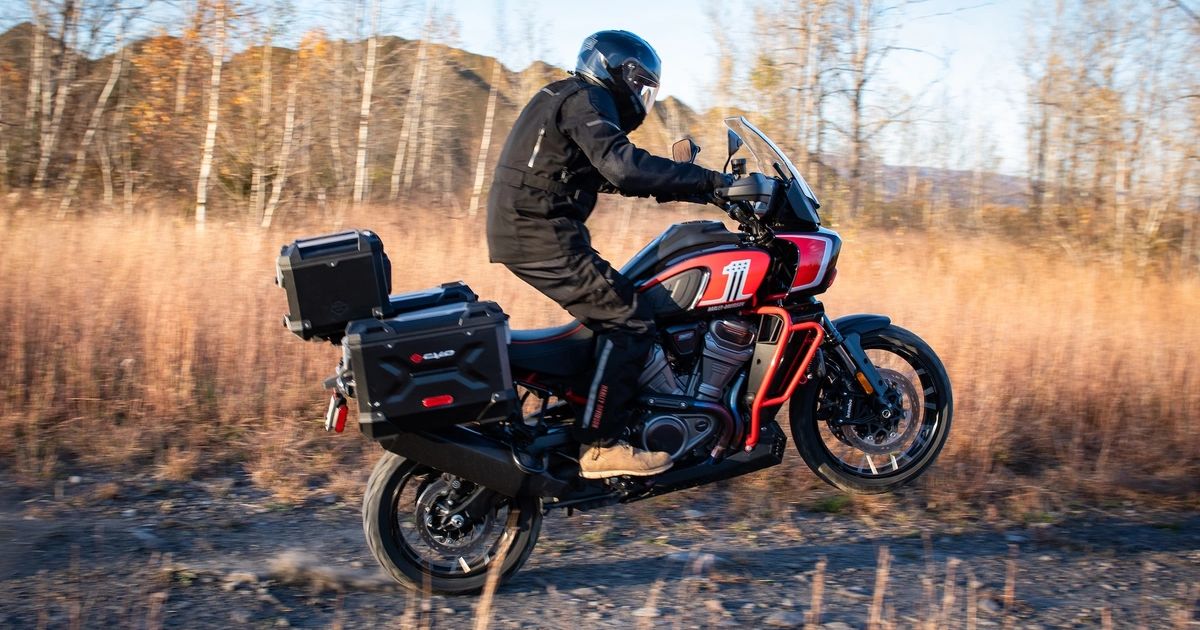
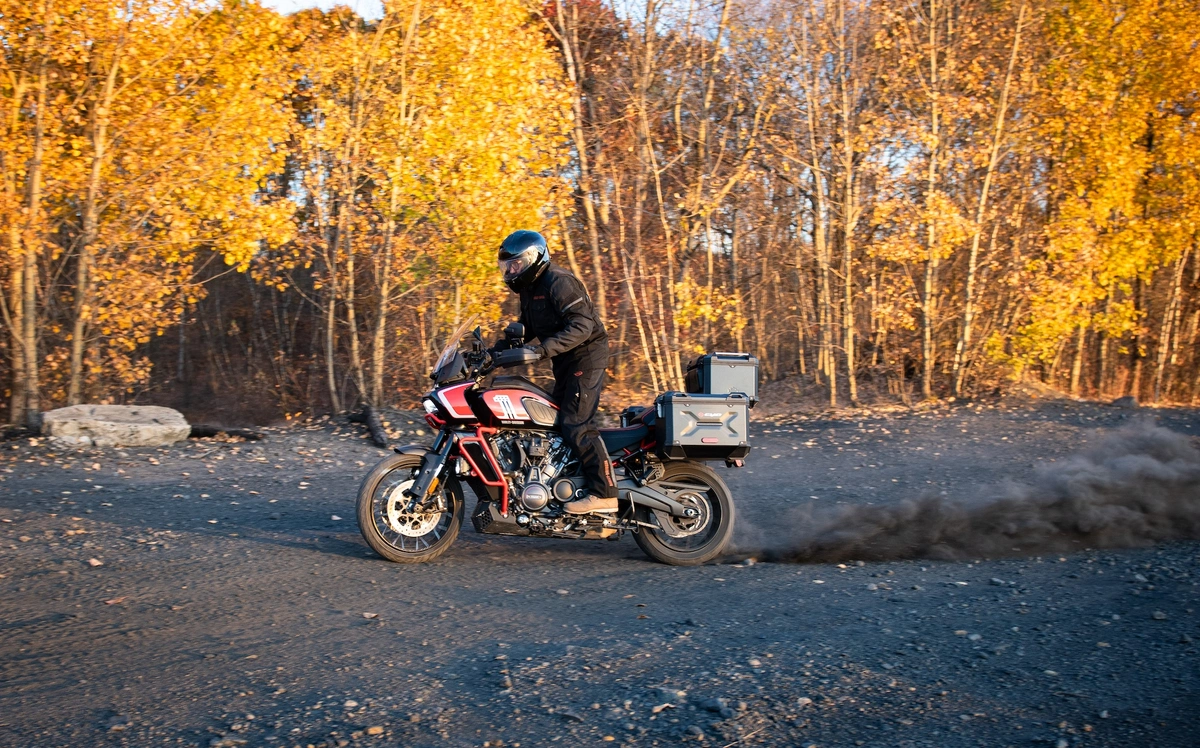
With those questions in mind, I needed to discover what this bike was truly about. After a few emails, I had one for testing. Over 10 days, I took this oversized ADV beast on a journey from triple-digit highway rides to rugged trails to coal banks to some of the finest backcountry asphalt roads in PA.
For those buying or looking to rent before buying, here’s what I discovered about the Pan America CVO, which will also mostly speak for the multiple Pan America Special models available for rent on Twisted Road.
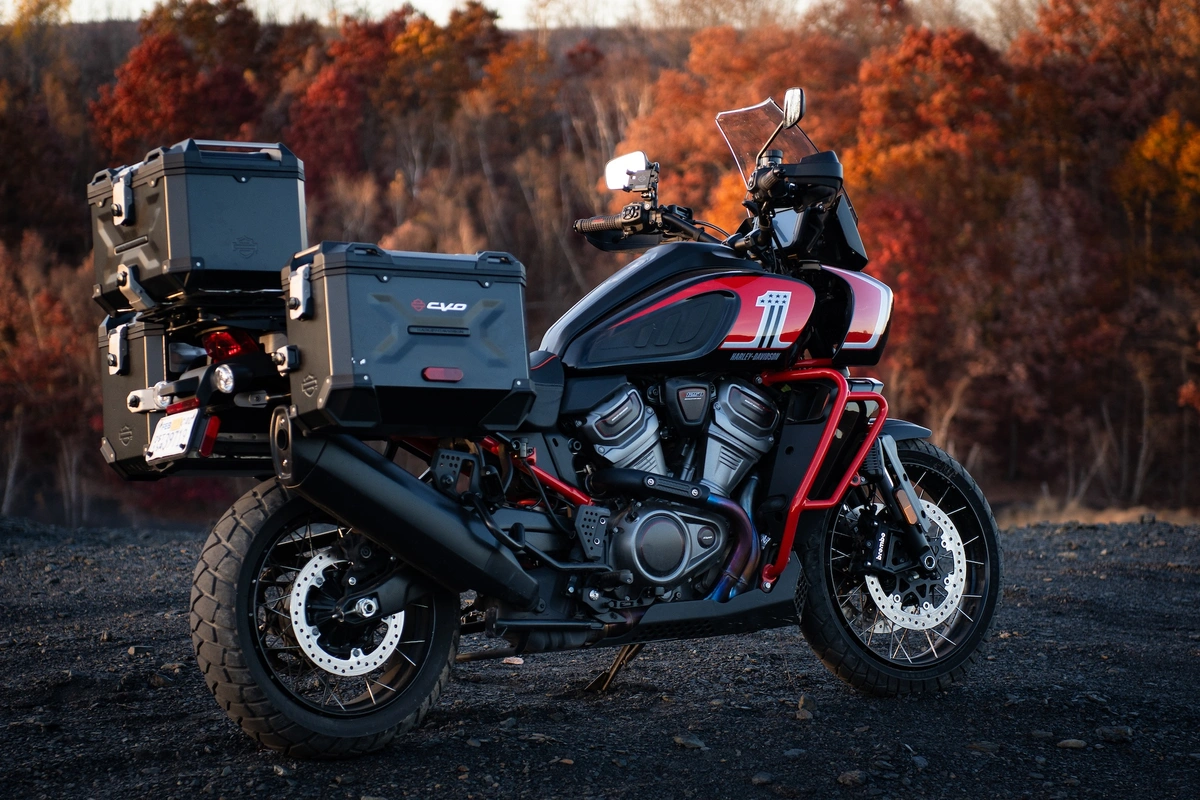
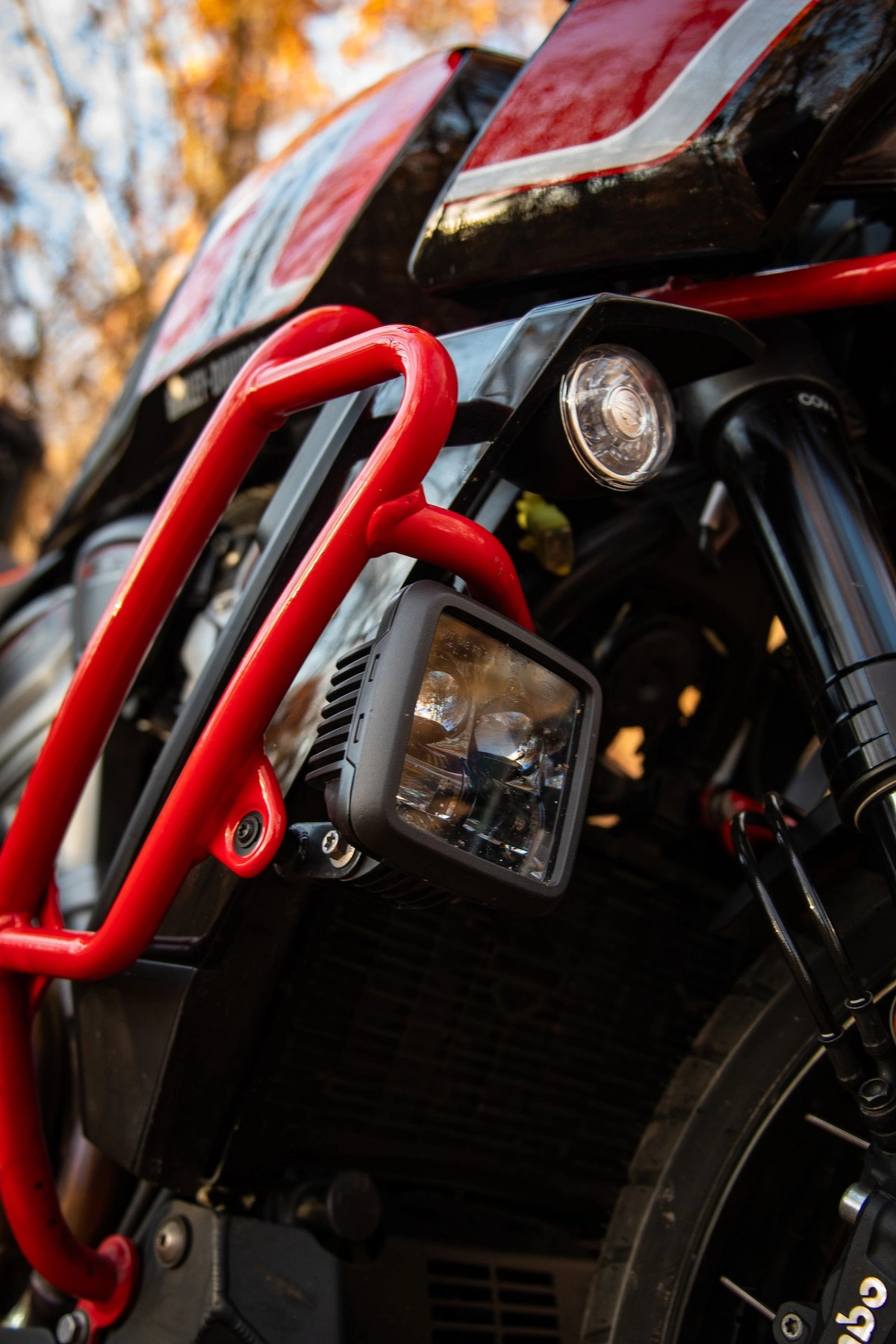
While both bikes are essentially the same at their core, the CVO model enhances the package with several premium features. These include a quickshifter for clutchless up/down shifts, the Adaptive Ride Height system that lowers the motorcycle when coming to a stop, aluminum side cases and a top box built by SW-MOTECH, tubeless spoked wheels, an aluminum skid plate, heated grips, and LED auxiliary lighting.
You also get Advanced Daymaker Adaptive Headlamp technology that utilizes the ABS inertial measurement unit (IMU) to determine the lean angle and automatically project additional light into unlit corners of the road or trail.
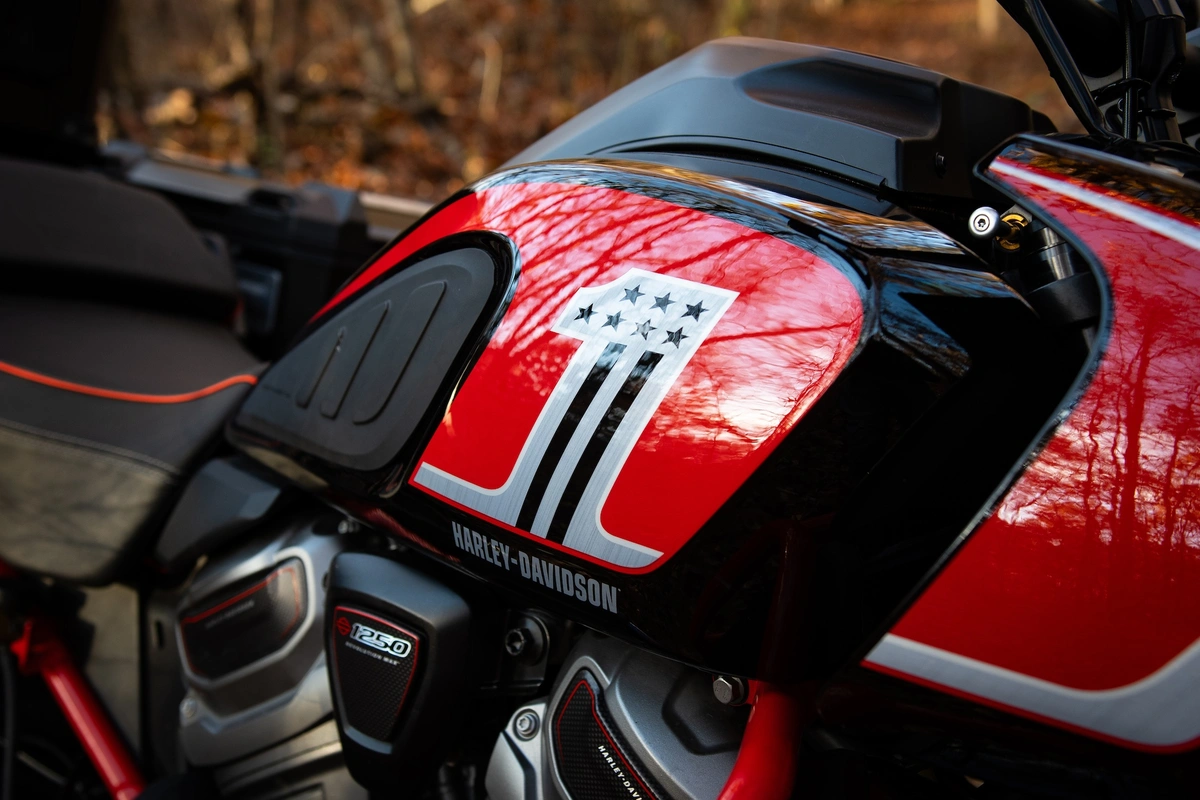
And don’t forget that signature paint with a big ole #1 on the gas tank that lets everyone know you’re on a Harley-Davidson. Oh, and also don’t forget that the added features, accessories, and exclusivity increase the Pan America CVO's price by $8,400 over the 1250 Special, bringing the total MSRP to $28,399.
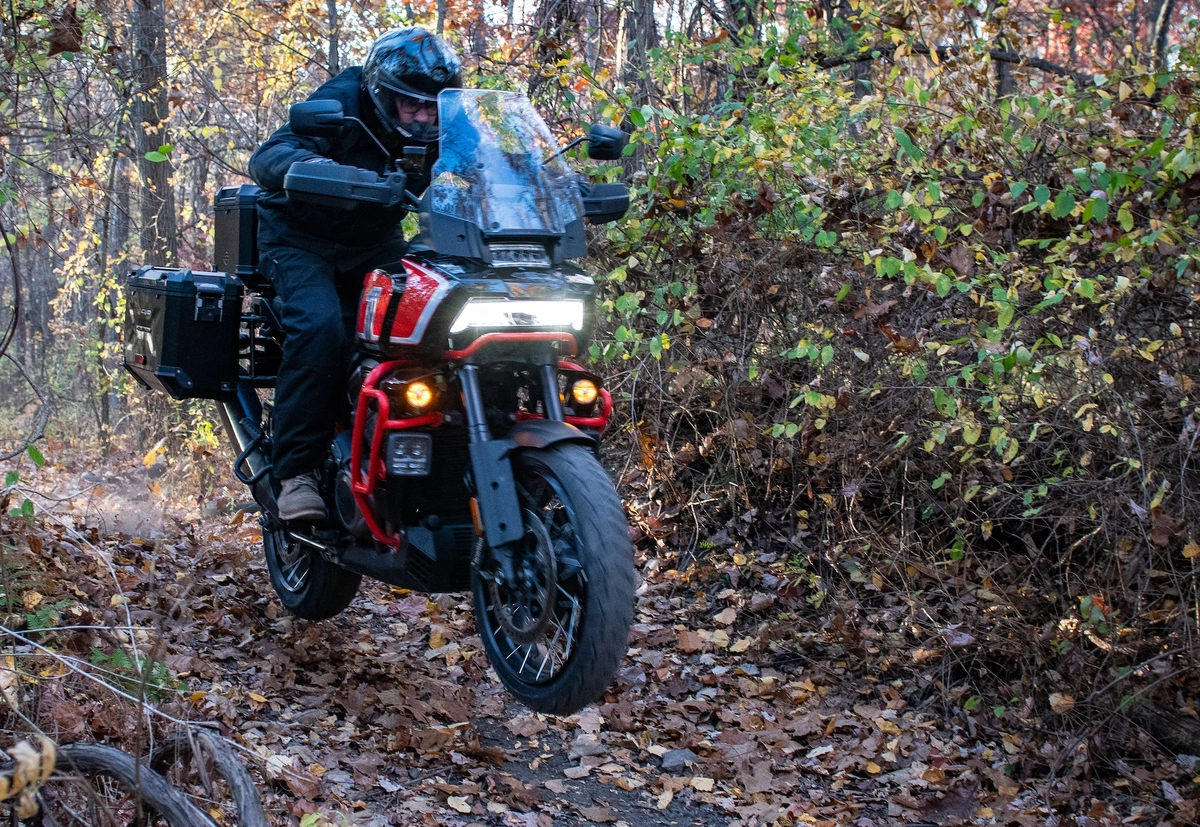
With a price tag like that, what else is there to do but get some air and wheelie action off-road?

First Impressions: A Behemoth with a Powerful Purpose
The first thing I noticed about the Pan America CVO is its massive presence, which seems even larger amid trees and trails off. It's undeniably a big bike, weighing in at a hefty 659 pounds with a full tank of fuel. To put this in perspective, a ride-ready BMW R 1250 GS weighs 591 pounds. And most, including me, think that Bavarian is ginormous!
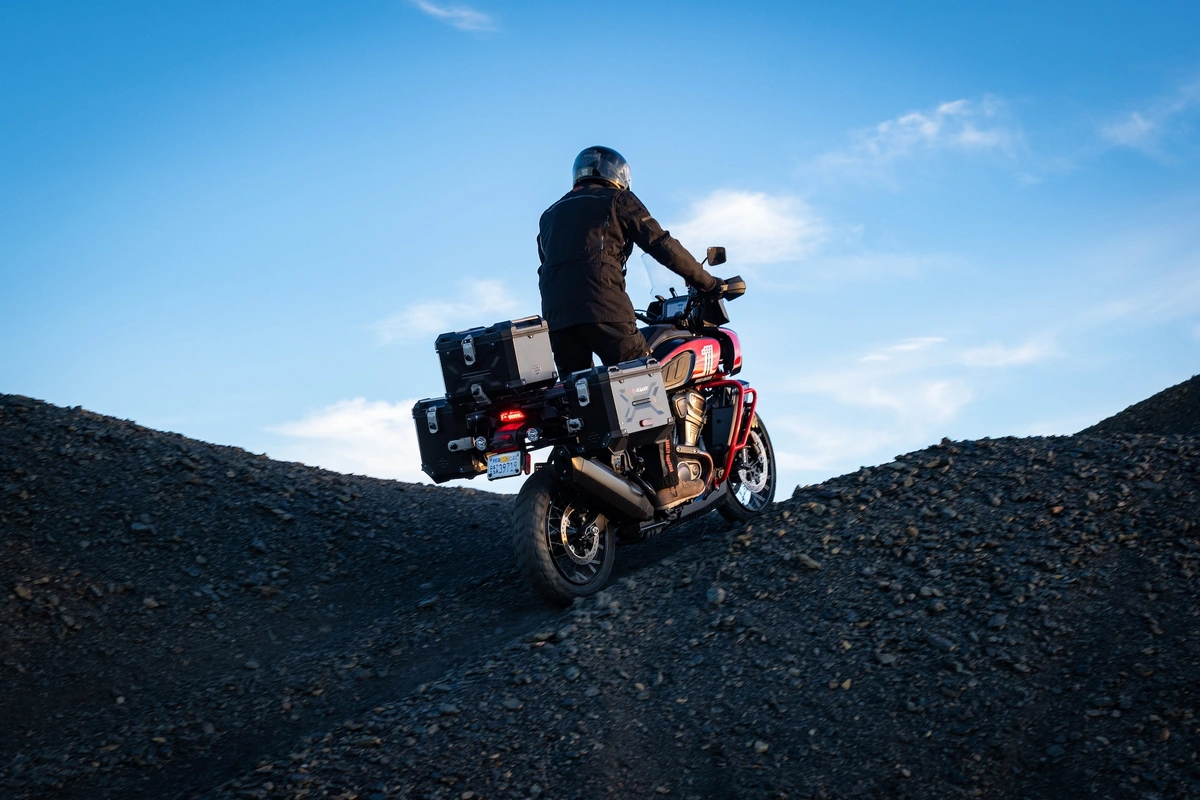
But don't let the weight intimidate you. The bike's design cleverly masks its bulk, and the adaptive ride height (ARH) system helps manage it effectively. At stops and slow speeds, the suspension automatically lowers, allowing riders—even those shorter in stature—to plant their feet firmly on the ground. I would be fine with the 31.4-inch standard seat height adaptability is a key feature that reassures riders of the Pan America CVO's usability in various conditions.
This ARH feature alone sets it apart from many competitors. It is a godsend for shorter riders who must halt on uneven ground. It does provide added confidence when at a stop, especially in slippery gravel. You can mess with the settings, but I kept the bike on ARH on auto, meaning it would start lowering under 10 mph.
This was a weird feeling under some quick-to-slow trail sections, so I eventually shut it off. But on the road, it was undeniably a top feature, allowing me to fully flatfoot with some space while stopped (although this also caused some heat issues for me…more to come on that!).
The engine is, without a doubt, equally as impressive.
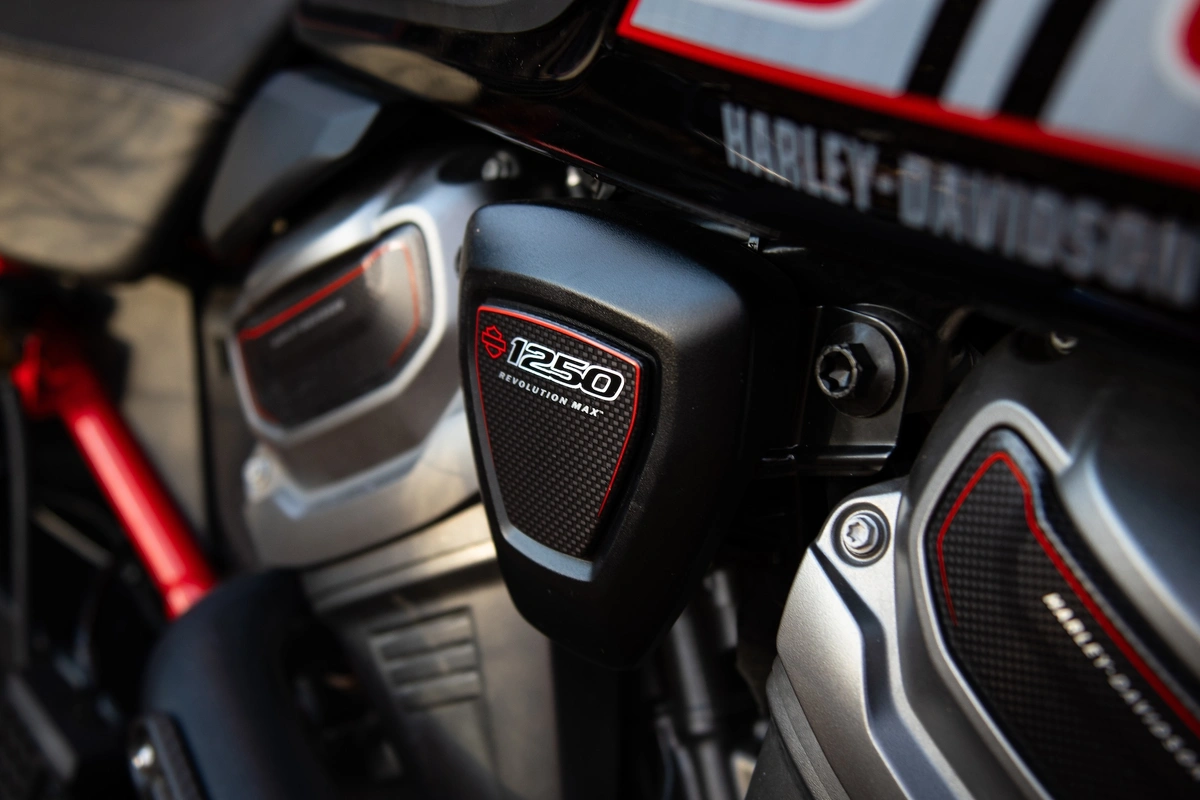
Underneath the rugged exterior lies the Revolution Max 1250 engine, a liquid-cooled 60-degree V-Twin producing a linear 150 horsepower and 95 ft-lb of torque. This powerplant departs from Harley's traditional 45-degree Milwuakee Eight engines found in The Motor Company’s touring and cruiser platforms, signaling the Milwuakee brand's commitment to innovation in this new segment.
Get past 6,000 rpm, and the power builds quickly until the 9,500 rpm rev limiter. Push the bike to the rev limiter in sixth gear, and you’ll see 135 mph. Typical of a V-twin, the mid-range torque is particularly satisfying, providing ample grunt when you roll on the throttle at cruising speeds or need to speed up off-road.
In technical off-road sections, I found short-shifting into second gear the sweet spot. The engine delivers a consistent flow of torque at lower RPMs, allowing for precise control over obstacles like rocks and ruts. The clutch deserves special mention here. It offers a light pull, and slipping it during delicate maneuvers feels smooth and predictable. It feels VERY much like a BMW GS clutch, which many will appreciate.
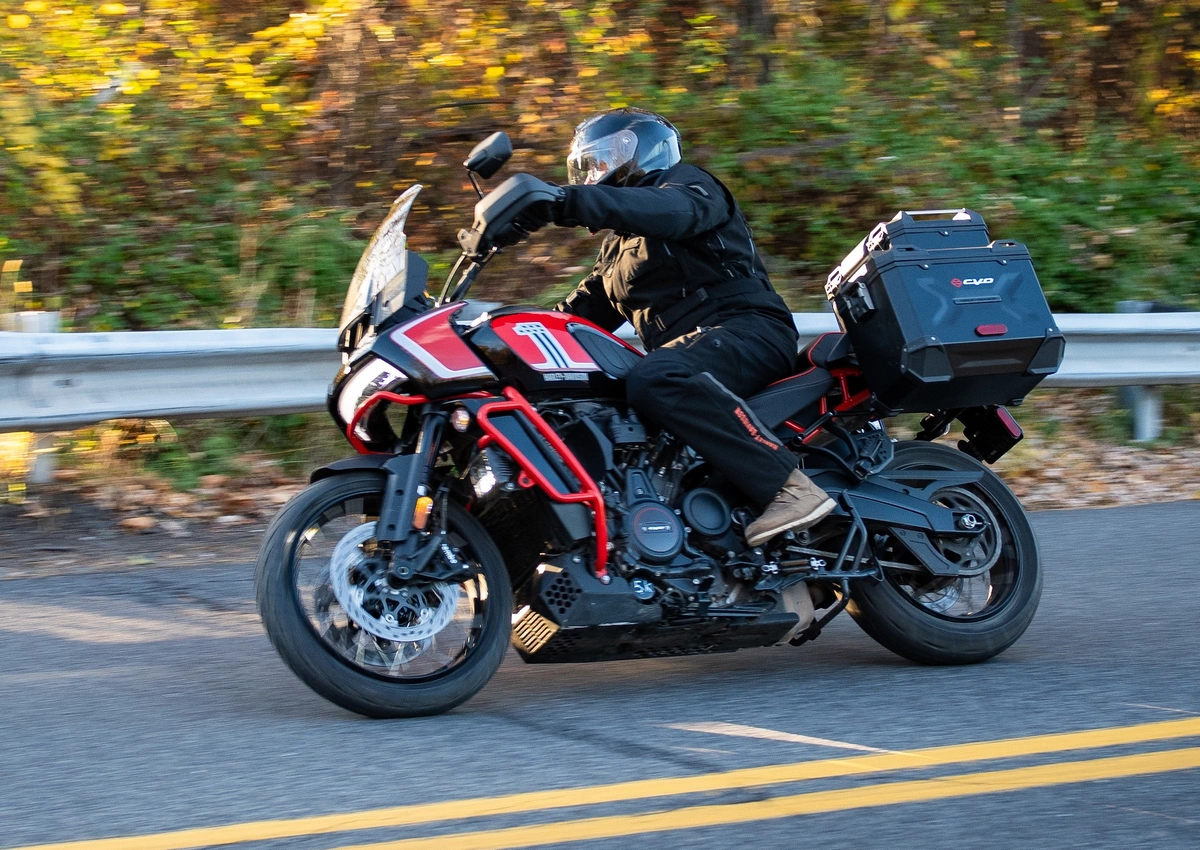
The Pan America CVO also arrives standard with a Screamin Eagle Quickshifter for clutchless up/downshifting. I admit this technology spoils me, and Harley’s performed decently.
Not the best, but decent. While it works seamlessly during aggressive riding, it feels clunky during casual upshifts and downshifts. In technical off-road situations where precise gear changes are crucial, this can be a bit jarring, oddly more on the upshifts.
The bike has five rider modes, including Road, Sport, Rain, Off-Road, and Off-Road Plus, and two customizable modes. Each mode adjusts the throttle response, ABS, traction control, and suspension settings to suit the surfaces better. As the Ducati Multistrada V4S and DesertX owner, I’m used to fine-tuning each mode. You can’t do that with the Harley.
But the H-D folks didn’t forget about customization for riders like me. For those who like to fine-tune their experience, the custom modes allow you to mix and match settings to your preference, allowing you to fine-tune two modes to customize everything from throttle response to braking.
Besides the riding modes and quickshifter, the Pan America CVO is also packed with electronics that rival the best from Europe and Japan, including:
-
Cornering ABS and Traction Control: Adjusts braking force and power delivery based on lean angle. I tested this at extreme conditions in the dirt and on the road, and the electronics performed seamlessly, allowing me to grab a handful of front brakes at full cornering off-road and loads of throttle in greasy conditions while turning on road. And that picture of the bike on its side in this article? That was purposely done so I could see how easily the bike could lift up solo (more below!).
-
Hill Hold Control: This prevents the bike from rolling backward on inclines. It is useless for me, but it is a game changer for others.
-
Drag-Torque Slip Control System (DSCS): Manages rear-wheel slip during deceleration. To be blunt, the DSCS just feels like stronger engine braking.
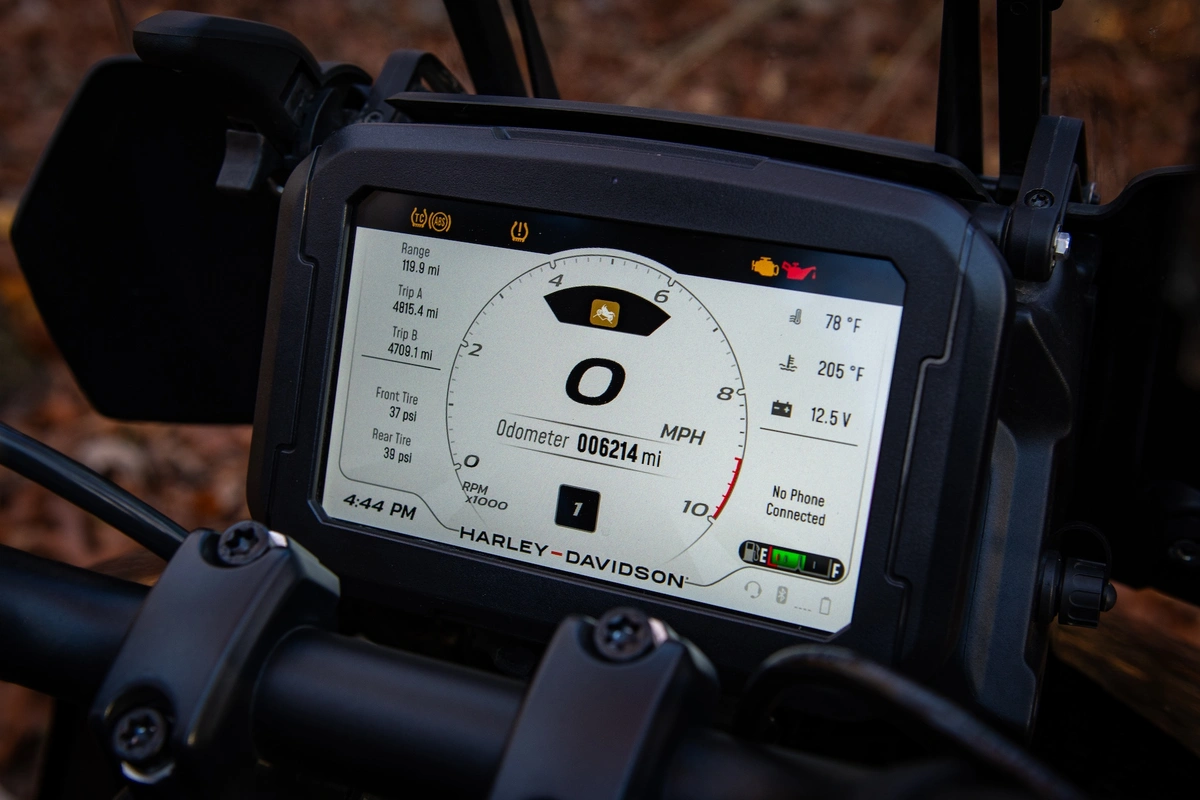
These settings are all viewed through the 6.8-inch TFT touchscreen display, which is easy to read even in direct sunlight. The layout of the gauges is definitely not my favorite, especially since some information is repeated, but that’s a personal thing and won’t affect the majority of riders.
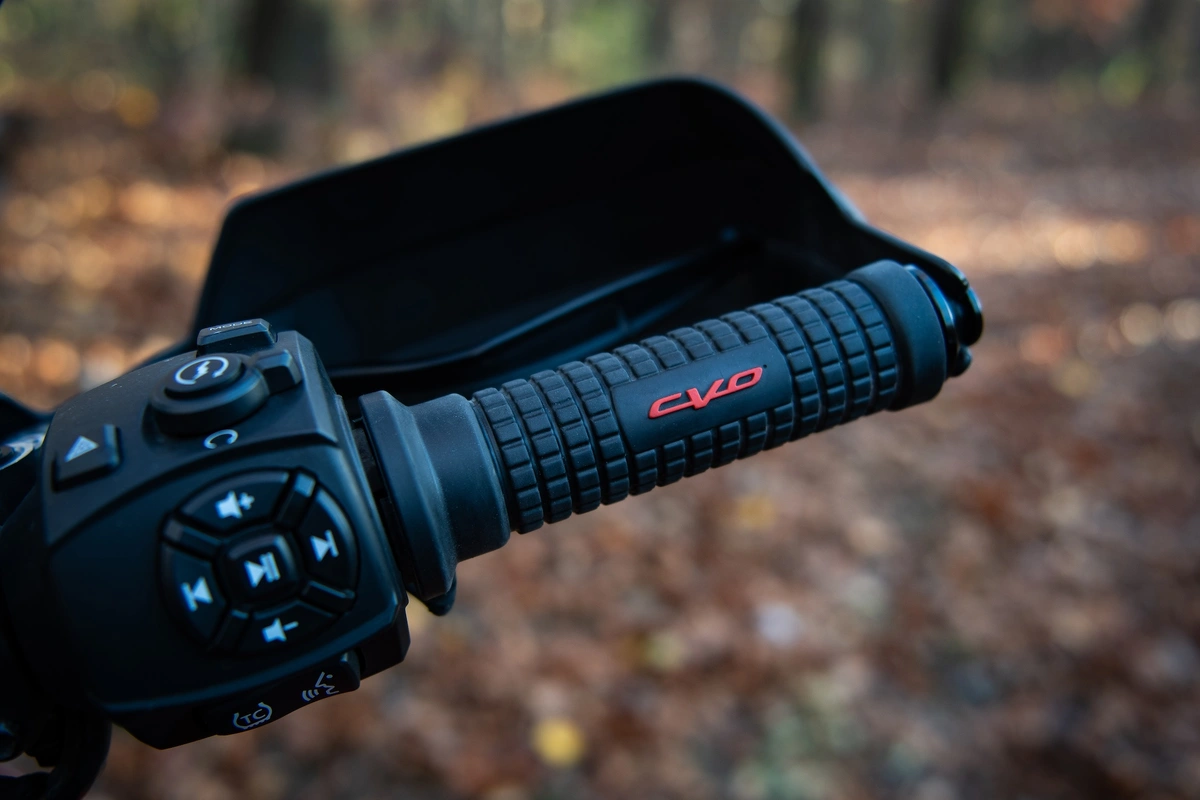
And for those who prefer to slip that rear wheel or wheelie, you can easily shut off the traction control with a quick push of the TC button on the proper controls. The bike must be running and stopped to disengage TC, but it’ll turn back on if you swap into another mode.
This was a favorite feature and super easy to use. The ABS isn't fully switchable, though when in Off-Road Mode, if you hold the Mode button in, Off-Road Plus kicks in, which disables the rear wheel ABS, allowing you to slide the rear through corners.
Speaking of ease, Harley designers also designed the controls perfectly for me—everything is straightforward, and I love the heated grips button within the thumb's reach on the clutch side. This is another quick win for me; my Ducatis have them on the right side, and they are a PITA to use.
Chassis and Ergonomics
The rigid and lightweight frame contributes to the bike's off-road agility and positive handling. However, the real highlight regarding handling is the semi-active electronic suspension.
With 7.5 inches of travel at both the front and rear, the suspension adjusts damping rates on the fly based on inputs like speed, acceleration, and lean angle. On the highway in the Road mode, the ride is plush, soaking up imperfections with ease.
Transition to twisty backroads in sport or off-road trails in the off-road, and the suspension firms up, providing the stability needed for confident handling. And the bike also offers a generous 7.1 inches of ground clearance. Even pushing the bike on steep rock sections, I only smashed the skidplate a few times.
The Michelin Scorcher Adventure tires (120/70 R19 front; 170/60 R17 back), developed specifically for the Pan America, complement the suspension well. Though hardcore off-road enthusiasts might opt for more aggressive rubber, they offer a balanced grip on pavement and dirt. I’d consider the tire to be more of an 80% on-road/20% off-road tire.
For 98% of the target market, these tires will be perfect as they offer amazing on-road grip in wet and dry and decent grip off-road (thanks to the electronics, also!). But once things get greasy, like deeper mud or sand, the tires like to squirm.
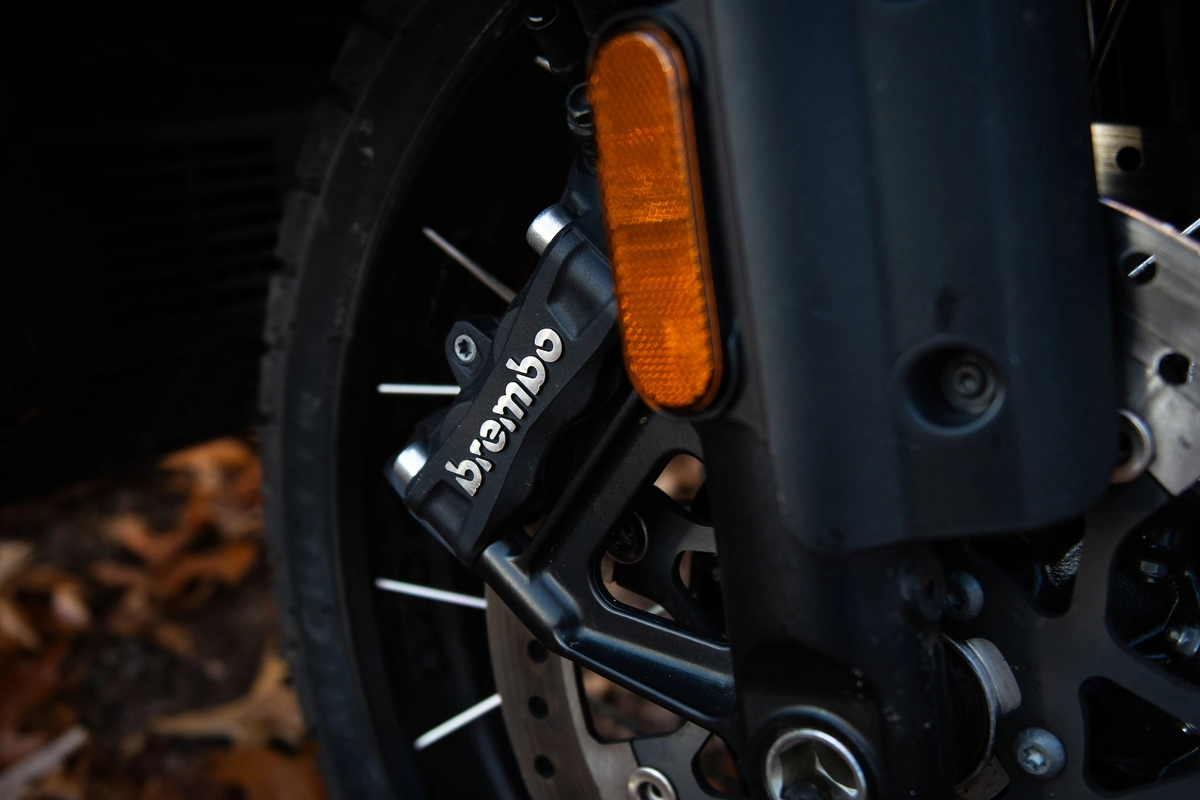
Stopping a bike of this mass requires serious hardware, and Harley doesn't disappoint. The Pan America CVO is equipped with the same setups most of the top European bikes use: Brembo radial monoblock four-piston calipers up front and a single-piston caliper at the rear.
Braking is strong and progressive—the strongest of any Harley I have ever ridden—providing confidence in various riding conditions. Whether you're coming to a sudden stop in traffic or modulating speed on a steep descent, the braking system delivers without drama.
Planning longer tours? Comfort will be there. The seat is comfortable, with enough cushioning to prevent fatigue over extended rides. And when standing off-road, it's slim between the legs. The upright and neutral riding position reduces strain on the wrists and back.
Other features that help relieve some misery on longer tours are cruise control and heated grips, both of which work flawlessly. The heated grips have three levels of heating, and even while riding one 32-degree morning, level 3 kept my fingers warm while wearing H-D’s Passage Gauntlet gloves.
The Pan America CVO arrives with a 5.6-gallon fuel tank. I averaged around 42 mpg during my test rides, giving a theoretical range of about 235 miles. It's respectable for a bike of this size and power, reducing the frequency of fuel stops on long journeys.
Wind protection is adequate, thanks to the bike's sizable fairing and adjustable windscreen. At highway speeds, wind buffeting is minimal, allowing for a relaxed ride. However, the windscreen adjustment mechanism leaves room for improvement. And those square mirrors work well, allowing you to get a wide picture of what’s behind.
Adjusting the windscreen requires a firm grip and considerable effort. It's not something you can easily do on the fly, which is inconvenient when conditions change, such as entering a stretch of highway after city riding. A smoother, more user-friendly mechanism would greatly enhance the overall experience.
Mostly positives so far. However, like every motorcycle, it has some downsides.
A noticeable buzz creeps in around 4,000 RPM, translating to about 67 mph in sixth gear. It's a vibration that starts in the handlebars and, especially, the footpegs. Push past 4,000 RPM, and the buzz intensifies. As usual in this area, I ran a highway stretch for nearly an hour at 85+ mph, and my feet were going numb. This was with the rubber inserts contained in the footpegs—skinny by off-road ADV riding feel—so I couldn’t imagine what it’s like without them.
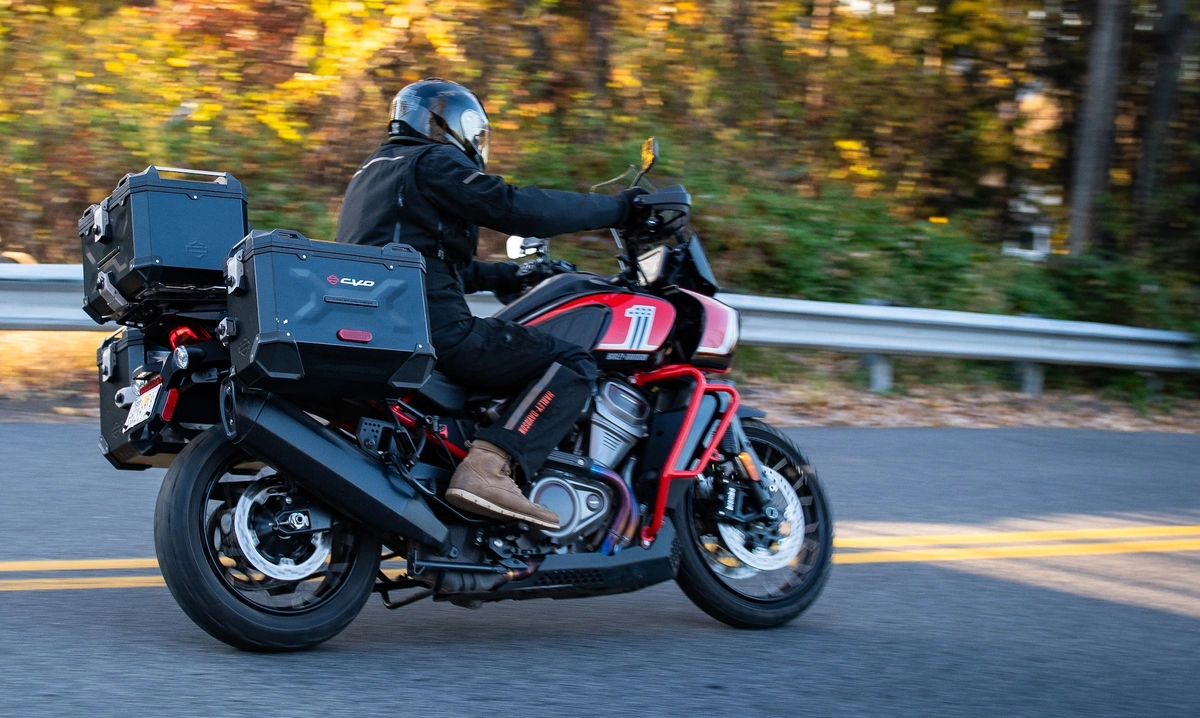
This can quickly fatigue. And it starkly contrasts the smoothness experienced at lower RPMs and speeds.
Heat management was another apparent issue during city and low-speed off-road riding. On a mild 65-degree night downtown, the engine temperature climbed to 214 degrees Fahrenheit. While high temperatures are not uncommon for big V-Twins, the exhaust placement became problematic. The same goes for first- and second-gear slow and tight single-track, but the heat is not nearly as bad while standing.
When the ARH system lowers the bike at stops or slow speeds, the exhaust pipe is closer than ever to my knee. I experience noticeable heat on my inner knee and lower thigh, making it uncomfortable. Potential buyers should be aware of this, especially if they plan to do a lot of stop-and-go riding or live in warmer climates.
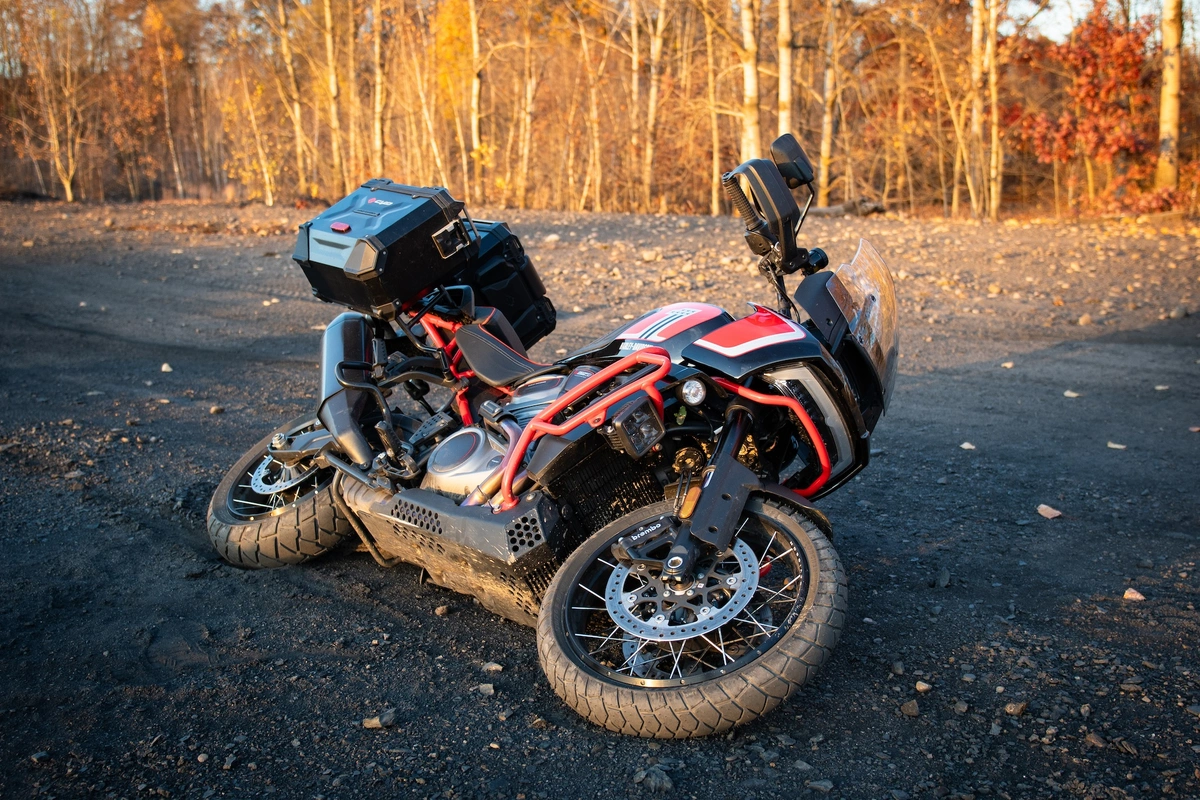
Curiosity (and perhaps a bit of practicality) led me to deliberately lay the bike on its side to see how manageable it would be to pick up. With the proper technique, lifting the 659-pound Pan America CVO was surprisingly easy, thanks partly to the luggage acting as a buffer and pivot point. Without the luggage? Hopefully, you’re not riding alone.
This may happen often; another quirk I discovered was the awkward kickstand. Firstly, the upper portion that you step on to put the kickstand down is in a much more forward position than other familiar adventure bikes. And you have to lean the bike to the right to extend it fully.
The process is troublesome on a flat surface and is even more troubling if your clutch side is on a hill.
Being a CVO, this Pan America comes loaded with premium features and exclusive styling. The custom paint job is stunning, with attention to detail typical of Harley's CVO line. It's a bike that garners admiration wherever it goes.
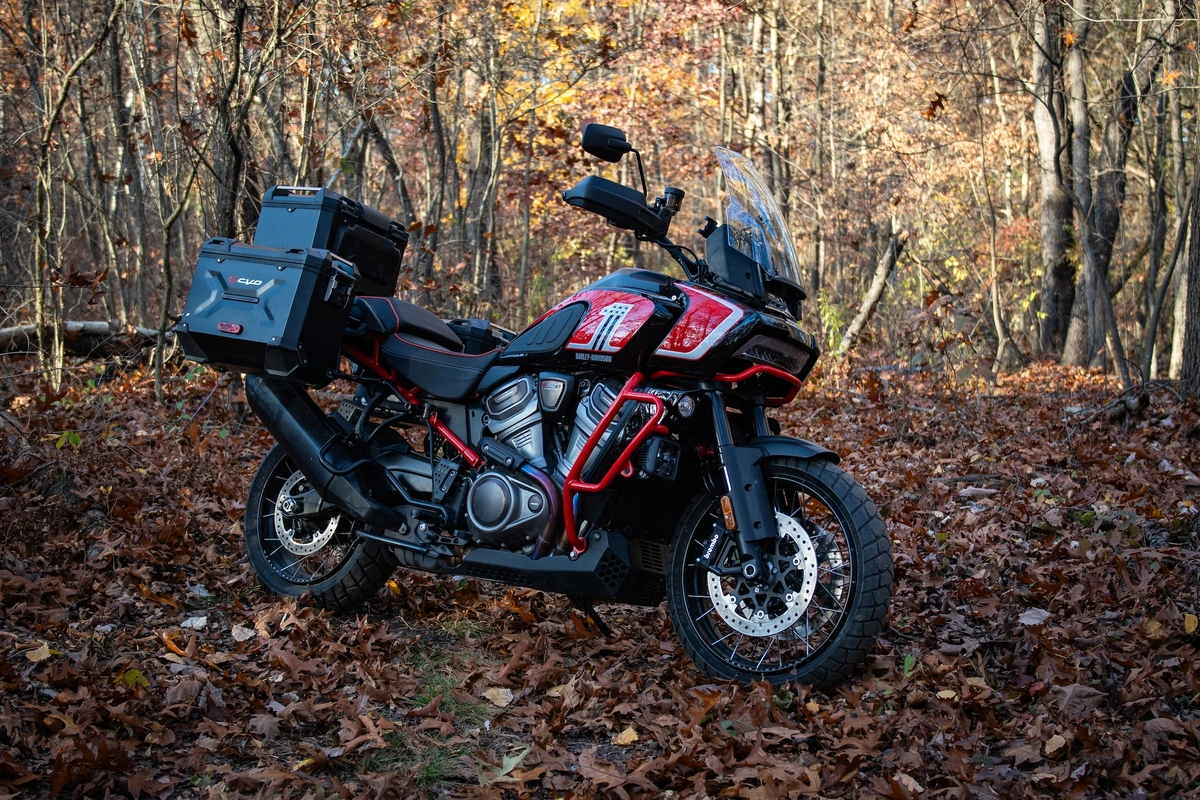
One of the most significant additions is the three-piece aluminum luggage set, consisting of two side cases and a top case. Combined, they offer a massive 112 liters of storage capacity. That's enough to swallow two full-face helmets, camping gear, and more.
However, the luggage makes the bike noticeably wider, hindering tight off-road situations or congested city streets. Removing the cases is a simple process; they all lock into their racks.
Price Point and Final Thoughts
With a starting price of $28,399, the Pan America CVO is a significant investment. It's priced higher than some of its competitors, which may give potential buyers pause. However, the premium features, advanced electronics, and the Harley-Davidson badge contribute to its value proposition.
This bike isn't for everyone. It's built for the adventure rider who appreciates luxury and isn't afraid to venture off the pavement—albeit perhaps not too far off. The Pan America CVO is capable off-road, but its size and weight require a rider skilled in handling large adventure bikes. It's not the most agile in extreme off-road conditions, but it holds its own on fire roads and, with a skilled rider, moderate trails.
On the highway and backroads, it’s simply fun—especially due to that fast-revving Revolution Max 1250 powerplant. The powerful engine, comfortable ergonomics, and electronics suite make it an ideal companion for long-distance touring. The engine buzz and finicky windscreen are minor drawbacks in an otherwise compelling package.
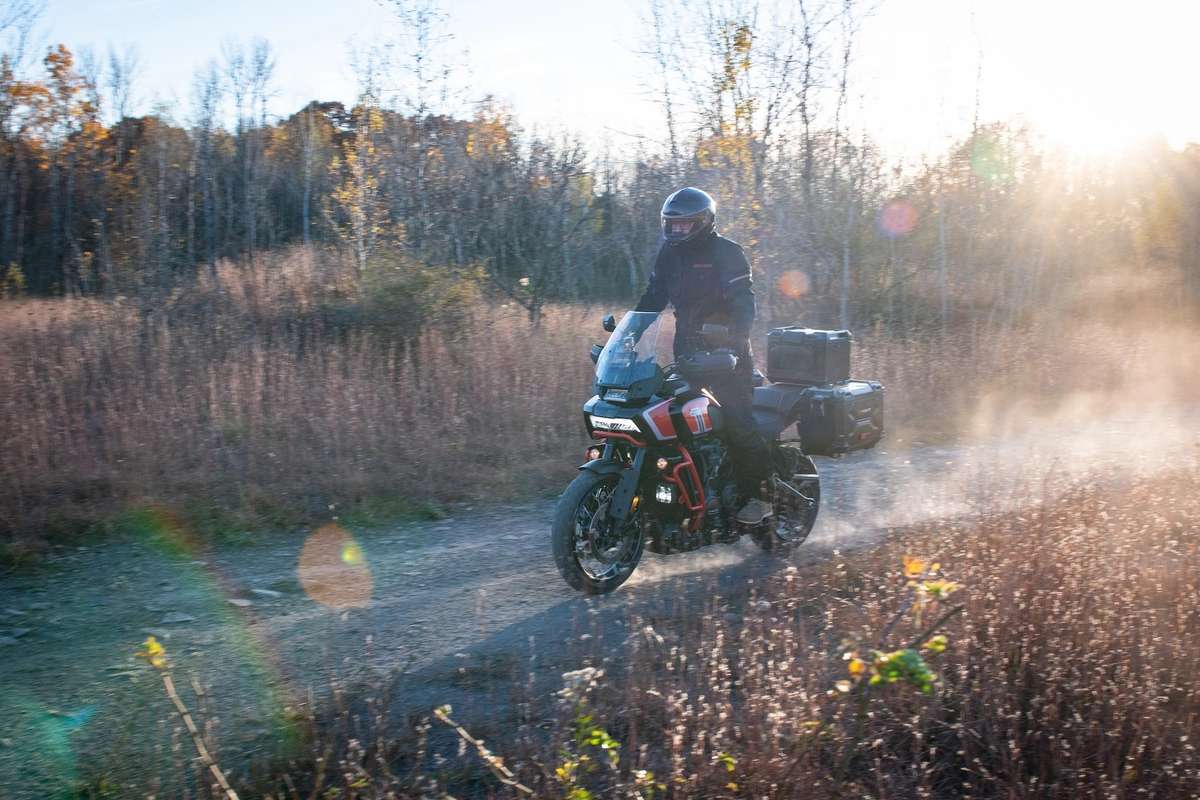
A New Frontier for Harley-Davidson
The 2024 Harley-Davidson Pan America CVO marks a significant milestone for the brand. It's a bold foray into a segment long dominated by European manufacturers, and it brings a distinctly American flavor to adventure touring.
For Harley enthusiasts who have been yearning for a bike that can take them beyond the asphalt without switching brands, the Pan America CVO is a no-brainer. It's not perfect, but it's a strong first effort that signals exciting things to come from Harley-Davidson.
As for me, the experience changed my initial negative perception. The Pan America CVO challenged my preconceptions and delivered a ride that was both exhilarating and comfortable. It's a bike that commands respect and delivers on its promises, provided you're willing to embrace its quirks and invest in its premium price tag.
If you're in the market for an adventure touring motorcycle and value the Harley-Davidson legacy, the Pan America CVO deserves a serious look. Just be prepared to answer many questions at your next stop—this bike is a conversation starter for sure, with a 50/50 blend of pure hatred or love.
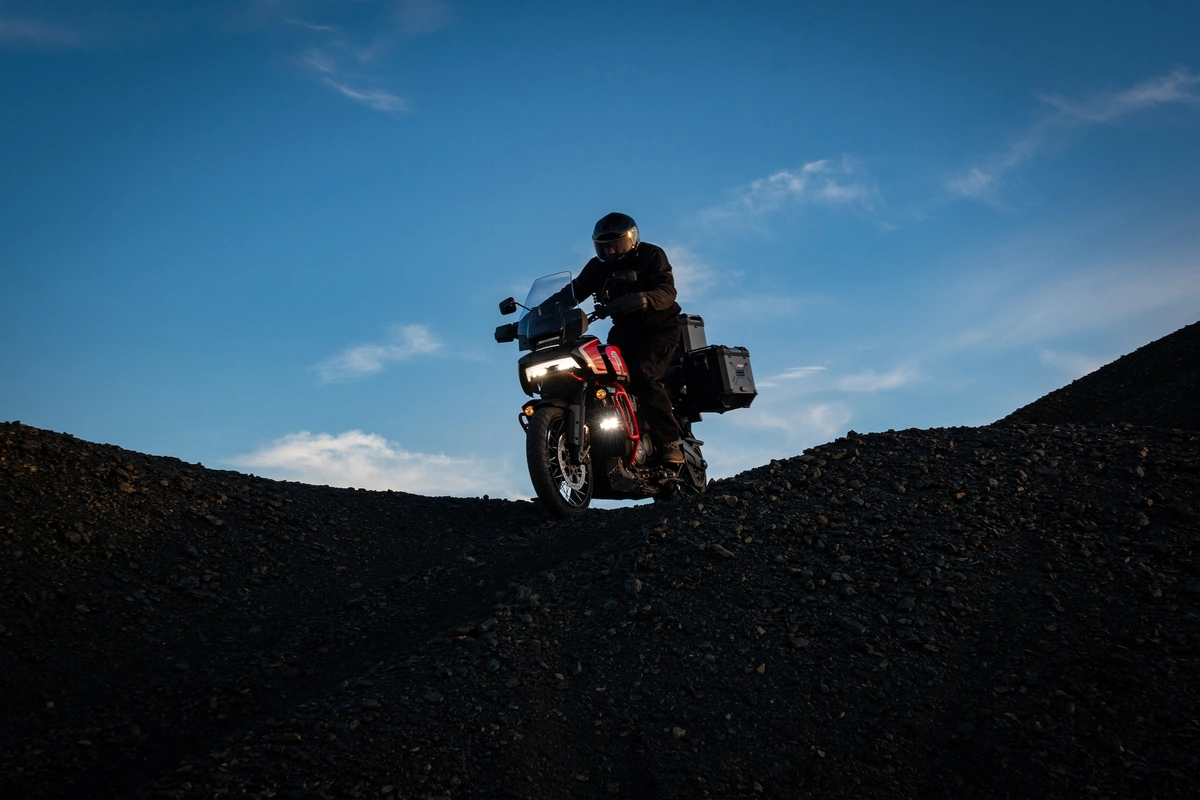
Riding Gear:
- Helmet: Harley-Davidson Capston Sun Shield II 31
- Jacket: Harley-Davidson Men's Grit Adventure Jacket
- Pants: Harley-Davidson Men's Grit
- Mid Layer: Harley-Davidson Flex
- Underlayers: Touratech Primero Allroad base layers
- Boots: Spidi X-Trail Outdry
2024 Harley-Davidson Pan America CVO Specs:
Performance:
- Top Speed: Approximately 135 mph
- Fuel Economy: Estimated around 42 mpg
- Range: Approximately 235 miles per full tank
Engine:
- Type: Revolution Max 1250 V-Twin
- Displacement: 1,252 cc
- Engine Cooling: Liquid-cooled
- Valve Train: Double Overhead Camshafts (DOHC), 4 valves per cylinder
- Bore x Stroke: 105 mm x 72 mm
- Compression Ratio: 13.0:1
- Horsepower: 150 hp at 9,000 rpm
- Torque: 95 ft-lb at 6,750 rpm
- Fuel System: Electronic Sequential Port Fuel Injection (ESPFI)
- Exhaust: 2-into-1-into-1; catalyst in header
Transmission:
- Type: 6-speed manual
- Clutch: Wet, multi-plate with assist and slipper functions
- Final Drive: Belt
Dimensions:
- Length: 92.3 inches
- Seat Height (Unladen): 30.4/31.4 inches
- Ground Clearance: 7.1 inches
- Rake (Steering Head Angle): 25 degrees
- Trail: 4.3 inches
- Wheelbase: 62.4 inches
- Fuel Capacity: 5.6 gallons
- Running Order Weight (Wet): 659 pounds
Chassis:
- Frame: Modular frame with engine as a stressed member
- Front Suspension: Semi-active, electronically adjustable 47 mm inverted fork with adjustable compression and rebound damping; 7.5 inches (190 mm) of travel
- Rear Suspension: Semi-active, electronically adjustable piggyback monoshock; adjustable preload, compression, and rebound damping; 7.5 inches (190 mm) of travel
- Adaptive Ride Height (ARH): Automatically lowers suspension at stops
Brakes:
- Front Brakes: Dual 320 mm discs with Brembo radial monoblock 4-piston calipers
- Rear Brake: Single 280 mm disc with Brembo 2-piston caliper
- ABS: Cornering Enhanced Antilock Braking System (C-ABS)
Wheels and Tires:
- Front Wheel: 19-inch tubeless spoked wheel
- Rear Wheel: 17-inch tubeless spoked wheel
- Front Tire: Michelin Scorcher Adventure 120/70 R19
- Rear Tire: Michelin Scorcher Adventure 170/60 R17
Electronics and Technology:
- Riding Modes: Road, Sport, Rain, Off-Road, Off-Road Plus, and two Custom Modes
- Instrument Display: 6.8-inch TFT touchscreen with Bluetooth® connectivity
- Lighting: All LED lighting including Daymaker® Signature adaptive headlamp and LED auxiliary lights
- Cruise Control: Standard
- Heated Grips: Standard
- Traction Control: Cornering Enhanced Traction Control System (C-TCS)
- Drag-Torque Slip Control System (DSCS): Standard
- Hill Hold Control (HHC): Standard
- Screamin’ Eagle® Quickshifter: For clutchless upshifts and downshifts
- TPMS: Tire Pressure Monitoring System
Additional Features:
- Aluminum Skid Plate: Provides protection for the undercarriage
- Aluminum Side Cases and Top Box: Built by SW-MOTECH
- Luggage Storage Capacity: Approximately 112 liters combined
- Premium Paint and Styling: Exclusive CVO paint scheme with a prominent #1 on the fuel tank
- Adaptive Ride Height (ARH): Lowers the motorcycle when coming to a stop
- Tubeless Spoked Wheels: Allows for easy tire repairs and replacements
Pricing:
-
MSRP: $28,399 (USD)
Service and Maintenance:
-
Service Intervals: Suggested maintenance every 5,000 miles (oil/filter change, check/adjust drive chain, other inspections)